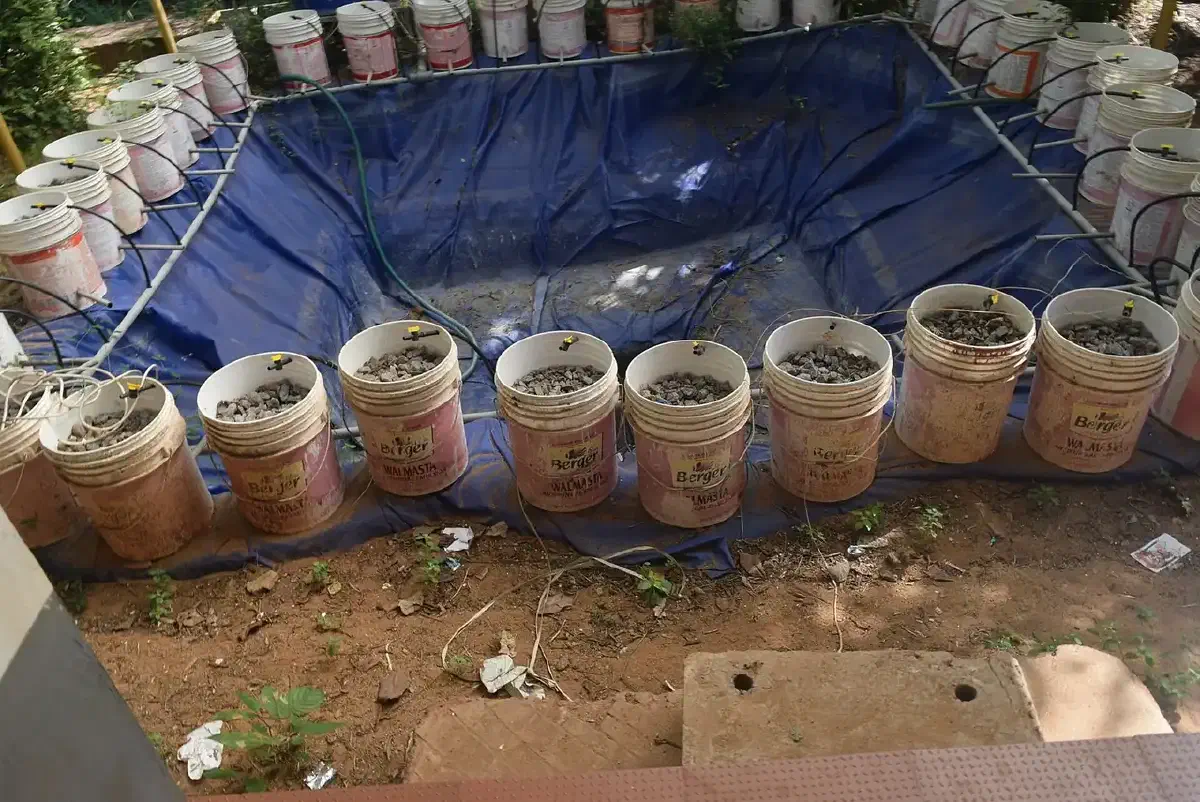
Aquaponics joins two older ideas: aquaculture, which is raising fish, and hydroponics, which is growing plants in water instead of soil. Put them in one loop and each solves the other’s problem. The fish produce waste that would foul a closed tank. The plants take that waste up as fertilizer and send clean water back. Done properly, you get vegetables and fish from one system that needs very little outside input once it is running.
“Done properly” is the catch. The loop only holds together if the fish, the plants and the bacteria between them stay in balance. This guide walks through building a system from scratch and keeping it self-sustaining, in roughly the order you will face each decision.
How the loop works #
Fish excrete waste rich in ammonia, which is toxic to them at any real concentration. Beneficial bacteria colonize the system and convert that ammonia first into nitrites and then into nitrates. Nitrates are what plants want. The plants absorb them, which cleans the water, and the water returns to the fish tank.
Three populations are doing the work: fish, plants and bacteria. If you lose track of any one of them, the system drifts. Nearly everything below is a way of keeping all three healthy at once.
Pick the location first #
The site affects everything that comes after it, so settle it before you buy anything. You need three things.
Light. Plants need sunlight to photosynthesize, so choose a spot with plenty of it through the day. Where natural light falls short, you will be paying for grow lights.
Water access. Water evaporates and plants take it up, so you will be topping the system off regularly. Put it close to a water source.
Shelter and access. Protect the system from extreme weather, and keep it convenient. Feeding fish, checking water levels and harvesting are daily or near-daily jobs, and a system that is awkward to reach gets neglected.
Build the fish tank #
The tank is the heart of the system. Its size depends on how many fish you plan to raise and which species. Common materials are food-grade plastic, fiberglass and glass. Weigh durability, cost and ease of cleaning. Whatever you choose must be food-grade, because everything in that water ends up feeding the plants you will eat.
Choose your fish #
Pick species that tolerate closed-loop conditions and grow quickly. The usual choices are:
- Tilapia, favored for hardiness and fast growth.
- Trout, which suit cooler water.
- Catfish, another hardy option.
- Koi, if you want an ornamental fish rather than a table fish.
Match the species to your water temperature, tank size and growth rate, and check each species’ specific requirements before you commit. A fish that does well in warm water will struggle in a cold garage, and the reverse is also true.
Design the grow beds #
Grow beds are where the plants live and take up nutrients. Three design choices matter.
Media. Gravel, clay pellets and grow stones are the common options. The media anchors roots and gives bacteria a surface to colonize.
Spacing and flow. Plan plant spacing and water flow together. Plants sitting in stagnant water will not do well.
Plant choices. Leafy greens such as lettuce, spinach and kale do especially well because they grow quickly in water and need no soil. Herbs such as basil also suit the setup. Fruiting plants like tomatoes can work, too, though they ask more of the system than greens do.
Pump and filtration #
A reliable pump moves water from the fish tank up to the grow beds and gives your plants their nutrients. Pick one that is efficient, durable and easy to maintain, since a failed pump is the quickest way to lose a system.
Filtration protects water quality, and there are three types to combine:
- Mechanical filtration (solids filters) removes solid waste before it breaks down and fouls the water.
- Biological filtration (biofilters) provides surface area for bacteria to turn ammonia into nitrites and nitrates.
- Chemical filtration neutralizes toxins that may be present.
In a closed loop, fish waste accumulates fast and degrades the water if you don’t filter it out. Clean the filters on a schedule, because clogs cause trouble.
Introduce the bacteria #
Beneficial bacteria are the quiet workhorses of the whole setup. They turn toxic ammonia into nitrites and then into nitrates, which is how fish waste becomes plant food. You can introduce them through a biofilter or by adding a bacterial supplement.
Watch them indirectly, by watching what they do. If ammonia and nitrite levels stay low and nitrate is available, the bacteria are doing their job. If you see a buildup of harmful compounds, the bacterial community is not keeping up.
Test and balance the water #
Water testing is routine maintenance. Check pH, ammonia, nitrites and nitrates with a test kit, and add temperature, dissolved oxygen and general nutrient levels to your regular checks.
The source guidance puts the ideal pH range for aquaponics between 6.8 and 7.0. Keep ammonia and nitrite low, since both are toxic. Nitrate is good for the plants, but watch it so it doesn’t create nutrient imbalances.
Catching drift early is the whole point. A reading that is slightly off today is easy to correct. The same reading after a week of neglect might mean dead fish.
Aeration helps. Air stones or diffusers raise the oxygen level in the water, which your fish need to live and your plants need to grow.
Stock the system sensibly #
Overstocking is the classic beginner mistake. Too many fish create more waste than the plants and bacteria can process, and the water quality collapses. Too few plants for the number of fish leaves nutrients unused.
Think about nutrient requirements, growth rates and compatibility when choosing both fish and plants. Give the fish enough room, and keep the fish and plant populations in balance. Start small and add to the system as it proves stable.
Feed fish and plants #
Fish get a high-quality commercial feed with the nutrients they need. Do not overfeed. Uneaten and excess feed turns into extra waste and poor water quality. Adjust the amount and frequency to the fish’s size and species and to what the plants need.
The plants are mostly fed by the fish waste. If they show signs of nutrient deficiency, supplement the system or adjust the inputs. The aim is a balance between fish feeding and plant feeding so both thrive.
Harvest and replant #
Regular harvesting keeps the system productive. When you pick plants, cut them at the base of the stem to encourage regrowth. Leave the roots in the grow bed to decompose and feed the next planting. Handle plants gently to avoid disturbing neighboring roots, prune regularly to prevent crowding, and rinse the harvest to remove debris or fish waste before eating.
For fish, use a net and move them to a separate container for processing. Replace harvested fish with new fingerlings, and put in new seedlings to replace harvested plants, so there is a steady supply of both.
Troubleshoot common problems #
Four problems come up again and again.
- Algae growth. Cut down the sunlight reaching the water and keep nutrient levels in check.
- pH swings. Test regularly and correct early.
- Pests. Keep the area clean and free of debris that attracts them.
- Nutrient deficiencies and disease. Watch plant and fish health and act quickly when something changes.
Prevention beats cure. Regular water testing, well-maintained filtration and good hygiene around the system head off most of these before they become emergencies. When something does go wrong, the usual cause is a water parameter that drifted unnoticed.
Scale up carefully #
Once the basic system runs smoothly, you can grow it. Options include adding grow beds, increasing tank capacity or trying new plant varieties. Automating feeding, monitoring and water testing reduces the daily workload and improves consistency.
Don’t expand until the first system is stable. A larger system amplifies whatever imbalances already exist.
What self-sustaining means in practice #
A “self-sustaining” system doesn’t run itself. It needs minimal intervention once it is properly set up, but it depends on a person who stays vigilant, adapts to changes and keeps testing. The reward for that attention is a steady supply of fresh produce and healthy fish from a small footprint, using far less water than conventional growing because the water recirculates.
Start with a small build, learn how your water behaves, and let the system prove itself before you scale it.
Related reading: Food and water; The Use Of Vertical Farming Techniques In Prepping; The Role Of Microgreens In Urban Survival Strategies; Advantages Of Aquaponics In Sustainable Food Production