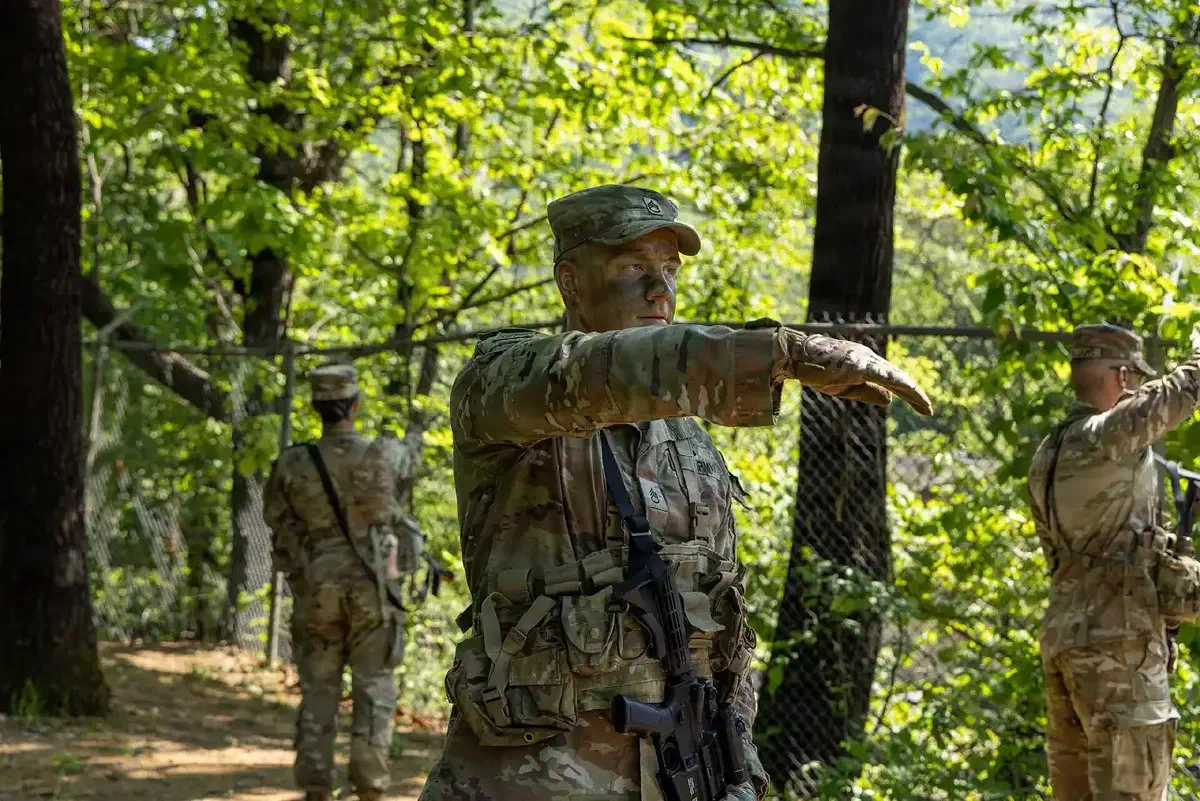
Talking is the default way people coordinate, and in a survival situation it often becomes impossible or unwise. Wind, running water, engines or distance can swallow your voice. A threat nearby may make any sound a risk. A group on the move, hunting, hiding or watching may simply need to stay quiet. In those cases, what you do with your hands, face and body takes over. This guide covers how non-verbal communication works, how touch fits in, a set of gestures you can adopt and how to practice it with the people you’ll depend on.
What non-verbal communication includes #
Non-verbal communication is the transmission of messages without words. It includes facial expressions, body language, gestures, posture, eye contact and even the tone and pitch of the voice. When spoken communication is limited, these cues carry information, emotions and intentions.
A few channels matter most.
- Facial expressions. A face reveals emotion, intention and reaction. A smile signals friendliness and a furrowed brow signals confusion or concern.
- Body language. The gestures, movements and postures you use. Leaning in can signal interest, and crossed arms may mean defensiveness or discomfort.
- Gestures. Deliberate movements of the hands or body. A thumbs-up means approval or agreement, and a hand raised palm out means stop or halt.
- Posture. How you hold your body. Standing tall with shoulders back signals strength and authority, and slouching suggests insecurity or fatigue.
- Eye contact. It can show interest, attentiveness, trust and even dominance, and it helps build connection.
Reading other people #
Sending signals is half the job. You also need to read what others send, especially when you must assess threats, judge a stranger or decide quickly how a group member is holding up. Three habits make you more accurate.
Look for consistency. Check whether what people say matches what they do. When verbal and non-verbal cues contradict each other, it may point to deception or hidden motives.
Consider context. The same gesture can mean different things in different settings. Pay attention to the environment and the social norms around you.
Watch for clusters. A single cue can mislead. Several cues pointing in the same direction are much more likely to indicate what a person is actually thinking or feeling.
the role of haptics #
Haptics is the study of touch and tactile communication. In a group under stress, touch can carry both information and emotion without a sound.
Comfort. A hand on the shoulder, a squeeze of the hand or a hug can express empathy and solidarity. When fear and anxiety run high, that matters more than most people expect, and it helps a group hold together.
Warning and urgency. A firm grip on the arm or a quick tug on a sleeve tells someone to stop or pay attention right now, with no need to speak. When time is short and a threat is close, these signals can start a quick, coordinated response.
Trust. Small gestures such as a nod of approval, a smile or a reassuring pat on the back build cooperation. In a situation where every decision can make the difference, trust and cooperation are assets that raise the group’s chances.
Touch signals need to be agreed in advance, just like hand signals, and they should respect individual comfort. Decide beforehand which patterns mean what.
A working vocabulary of gestures #
Survival sign language, sometimes called gesture-based communication, uses hand gestures, facial expressions and body language to send messages when speaking is impossible or dangerous. It draws on indigenous traditions, military operations and the sign languages used by people who are deaf or hard of hearing, and the ability to communicate silently has been valuable for a very long time.
Keep a few principles in mind. Make gestures clear and simple, since complicated movements get misread. Favor universal gestures such as pointing to indicate direction or nodding to show agreement. Pay attention to context, since the environment and the relationship between you and the other person affect how a signal reads. And watch the other person’s feedback, because their gestures and expressions tell you whether the message landed.
Here is a basic set of gestures, grouped by purpose. Agree on your own with your group, but these are a place to start.
Basic
- Pointing: shows direction or draws attention to something.
- Thumbs up: approval or agreement.
- Thumbs down: disapproval or disagreement.
- Hand waving: a friendly greeting or farewell.
Emergency
- Arms crossed over the chest: “Stop” or “Danger.”
- Raised hand, palm out: “Wait” or “Hold on.”
- Hands moving rapidly up and down: “Help” or “Emergency.”
Direction
- Pointing index finger: a specific direction or location.
- Circular motion with the hand: “Around” or “Circle back.”
- Hand waved from side to side: “Left” or “Right.”
Questions
- Raised eyebrows: asking a question or seeking clarification.
- Head tilted to the side: confusion or uncertainty.
- Shrugged shoulders: “I don’t know” or “I’m not sure.”
Add your own for the things your group faces. Assign specific signals to common survival situations, such as water, food, danger and help. A raised fist could mean danger and a thumbs-up could mean everything is okay. Whatever you choose, make sure everyone knows the same set.
Where silent communication earns its keep #
Emergencies. In disasters, accidents and crises, silent signals let you coordinate rescue, call for help or relay information when noise or danger rules out speech.
Outdoor activities. Hikers, campers and boaters can use gestures to communicate over distance or across noisy water and wind, and to pass warnings or directions without shouting.
Security threats. If you have to communicate while a threat is nearby, non-verbal methods help. Hand signals can convey basic messages or directions. A set of gestures agreed with trusted contacts lets you pass more complex ideas. Eye contact and body language can silently show your intentions. Combine this with discretion: keep your voice low, keep conversations short and avoid drawing attention to yourself.
Military and law enforcement. Soldiers and police are trained in non-verbal communication so they can maintain stealth and coordinate without speaking, which shows how far the method goes.
Communicating with people who are deaf or hard of hearing. Knowing basic sign language helps include them in conversations and activities.
Signals that cover distance #
Gestures work at arm’s length or across a clearing, but some situations need signals that carry farther. Whistle codes, light signals, flags, smoke and mirrors extend the same idea. Learn the basic signals, such as hand signals, whistle codes or light signals, and practice them with your group so all understand the same ones. Use visual cues in the environment, such as smoke signals, signal mirrors or flags, and make sure they are easy to see and recognize. Morse code, sent with a flashlight or a waved flag, lets you pass messages in dots and dashes, but you have to practice it before you need it.
Building the skill #
None of this comes naturally under stress. Treat it like any other survival skill.
Establish clear signals and codes. Whether it’s a hand gesture, a touch pattern or a facial expression, a set of pre-defined signals lets everyone pass and understand messages quickly and accurately. Write the set down and review it.
Practice with a partner. Pass messages without speaking and challenge each other with different scenarios. Ask for feedback on your gestures.
Study basic sign language. Learn commonly used signs for letters, numbers and phrases to build a foundation.
Use gestures in everyday life. Add gestures and non-verbal cues to ordinary conversations so they become comfortable, and try asking questions and expressing emotions without words.
Attend a workshop. Training sessions give you hands-on practice and a chance to learn from people who know the subject.
Build self-awareness. You can’t control signals you don’t notice. Practice mindfulness to stay aware of your thoughts, feelings and body, ask trusted friends for honest feedback on your non-verbal style, and reflect on past interactions to find patterns and triggers.
Listen actively. Active listening is a non-verbal skill as much as a verbal one. Keep eye contact to show attentiveness. Use open body language with relaxed arms and uncrossed legs, so people feel they can speak freely. Paraphrase what you hear and ask clarifying questions to confirm you understood. Watch for the non-verbal cues that accompany the words, since they often say more than the words do. Active listening also sharpens your awareness of the situation and helps prevent misunderstandings.
Refine your body language. Stand or sit up straight to project confidence. Use gestures purposefully, without excess that distracts from your message. Practice a range of facial expressions to show empathy, concern, excitement or determination.
Trust and morale #
Non-verbal communication also shapes how a group feels, which matters as much as the signals themselves.
Show empathy through your face, gestures and posture. Let people see that you understand when someone is in distress. Signal willingness to share work, resources and tasks, and coordinate toward shared goals. Stay calm and confident even when things are uncertain, with good posture and reassuring gestures, because a group tends to take its tone from the people who seem steady.
Encourage open communication and feedback within the group. Invite members to share thoughts, concerns and observations. A group that talks freely, even if some of the talking is silent, gets critical information to the right people and acts on it promptly.
Pulling it together #
Choose a small set of signals and make them the group’s standard. Include a few for danger, stop, help and direction, and a couple of touch signals for the situations when you can’t use your hands or can’t be seen. Practice until nobody has to think about them. Review the set with new members, and revisit it when something doesn’t work. Then, when speech is impossible, the group won’t have to improvise.
Related reading: Security and comms · How to communicate safely during a security threat · Secure and stealthy communication networks · How to signal for help in the wilderness