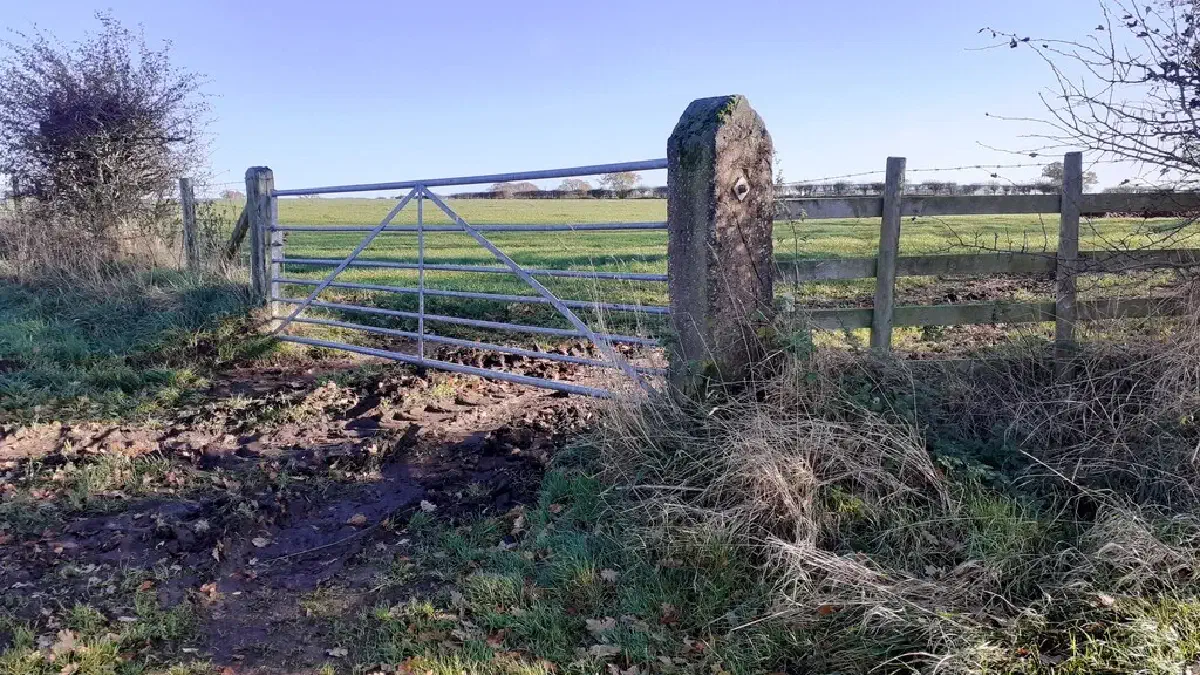
A rural homestead has one big advantage over a house in town: space. It also has the matching weakness. Your nearest neighbor may be a quarter mile away, the sheriff may be twenty minutes out on a good day, and the property has more edges, outbuildings and dark corners than one household can watch by eye. Good security out here is less about any single gadget and more about layers. Each layer buys you time and information, and time is the one thing you can’t get back once someone is already at the door.
The approach below works from the outside in: figure out where you are weak, harden the boundary, control the entry points, add detection, protect the outbuildings, and then decide in advance what everyone does when something goes wrong.
Start with an honest assessment #
Before you spend money on fencing or cameras, walk the property. Take a map or a sketch, and walk the whole boundary, not just the stretch along the driveway. You are looking for gaps in the fence line, gates that don’t latch, brush or ditches that let someone approach unseen, and any stretch where you simply can’t see from the house. Do it once in daylight and once after dark. A property that feels well covered at noon often has three or four blind spots under a moonless sky.
Then take stock of what you already have. Is there a fence, and is it in repair? Do all the doors and windows lock, and do the locks actually get used? Are the lights on a switch someone has to remember to flip? Be blunt about which measures work and which only look like security.
Weigh the risks specific to your land #
A risk assessment on a homestead is about geography as much as crime statistics. How close are you to a main road, where a stranger can slow down, look, and keep driving? What do neighboring properties look like, and how much of your land can they see? Are there natural obstacles, such as a creek, a steep slope or a dense treeline, that already channel movement, and do they help you or hide an approach? Once you know what actually threatens the place, you can spend where it matters rather than armoring the front door while the back pasture sits wide open. (Terrain itself can be a defensive asset; see our piece on using natural land features.)
The perimeter fence #
The fence is the first thing anyone meets, and its job is to slow people down and make them visible while they do it. Choose something tall, durable and hard to climb. Chain-link and barbed wire are the common choices on rural land, and either is only as good as its upkeep, so walk the line regularly for sagging, cut wire, washed-out bottoms and trees leaning on it.
To make a fence harder to scale, add anti-climbing features along the top: spikes, barbed wire, or electric wire where it is legal and safe for your situation. Check local rules and think about children, livestock and neighbors before you electrify anything.
Light and cameras along the line #
Motion-activated lighting along the fence turns darkness from an asset for the intruder into a liability. A light that snaps on draws your attention, and most people who are probing a property would rather move on than work under a floodlight. LED fixtures are the practical pick because they cost little to run and last. Put lights near entry points, along pathways and by anything valuable.
Cameras add evidence and early notice. Place them to cover entry points, blind spots and the fence itself, and choose models with night vision for round-the-clock coverage. High-definition footage is what lets law enforcement identify someone afterward, so a blurry camera is worth little. Aim for overlapping fields of view so that disabling one camera doesn’t blind a whole side of the property.
Entry points and access control #
Gates and driveways are where the perimeter is most often defeated, because they have to open. Controlling who can come in is the heart of homestead security.
Gates #
An electronic gate with a keypad or remote lets you restrict entry to people you have approved. Change the access codes and remote frequencies on a regular schedule, and always after someone who had a code stops needing it, whether that is a contractor, a hired hand or a former friend. Higher-end systems add biometric scanners or remote access from your phone.
Vehicle barriers #
A fence will not stop a truck. Bollards, heavy gates or tire spikes keep unauthorized vehicles from simply driving through the perimeter, which matters most for protecting stored equipment, fuel and livestock trailers from theft or vandalism. Pick durable, tamper-resistant barriers; a barrier that can be unbolted with a wrench is a suggestion.
Locks on the house #
Biometric locks using fingerprint or facial recognition are another way to ensure that only authorized people enter, and they are difficult to bypass. They are a convenience as much as a security upgrade, since there is no key to copy or lose. Whatever lock you use, make sure the door and frame behind it are solid, because a good lock in a weak frame is a weak door.
Detection and surveillance #
Layer detection onto the physical barriers so you know about a problem while there is still time to respond.
Intrusion detection sensors near the gates and driveway can pick up motion, sound or vibration and trigger an alarm. Tie them into your cameras so that an alert comes with a picture.
Wireless cameras are flexible and quick to install, which makes them a good fit for covering outbuildings and far corners where running cable is a hassle. Feed them to a central monitoring point so you can watch from the house or remotely.
A smart security system pulls these pieces together. Motion sensors, alarms and doorbell cameras can alert your phone in real time, and you can check on the property while you are away. The trade-off is dependence on power and internet service, which out here are not guaranteed. Pick systems with battery backup and local recording, and keep a plan for when the connection drops.
Some homesteaders go further with drones. A camera-equipped drone can patrol the fence line on a schedule and check high-risk areas from above, and it can look at a corner of the property you would otherwise have to walk to. It supplements the other layers rather than replacing them: weather, battery life and local regulations all limit how much you can rely on it.
Outbuildings and assets #
Barns, sheds, workshops and equipment yards are where the money often is: tools, fuel, feed, generators, tractors. They are also usually the least protected part of the property, and a thief can strip one while you sleep a hundred yards away.
Fit outbuildings with their own alarms: motion sensors, door and window contacts, and glass-break detectors, connected to a central monitoring station if you can. Replace weak hardware with high-security locks, using keyless, biometric or tamper-proof types, and reinforce the doors themselves with sturdy frames, deadbolts and shatter-resistant glazing. Inspect the locks and the frames now and then for wear, because the weak point on an old shed is usually rotted wood, not the padlock.
For high-value equipment, consider asset tracking. RFID tags, GPS trackers or Bluetooth beacons let you see where valuable machinery is at any moment and give you a fighting chance of recovering it if it leaves. Connect tracking to your surveillance system so the two tell the same story.
Plan the response, then drill it #
Hardware only detects and delays. People have to respond, and people respond badly to things they have never rehearsed.
Write down an emergency response plan covering the threats you actually face: break-ins, fire, medical emergencies, severe weather. Assign roles to family members or employees, so that each person knows who calls for help, who gets the children to the safe spot, and who shuts off equipment or gates. Run drills regularly, and change the plan when a drill shows something doesn’t work.
Set communication protocols as well. Keep a contact list for the sheriff, the nearest fire department, neighbors and anyone who can reach you quickly, and make sure everyone on the property knows how to reach help without hunting for a number. Remember that cell coverage can be patchy in rural areas; know what works where you live, and have a backup such as a radio.
Finally, consider professional training. Classes in home security, self-defense or emergency response will teach you things that reading won’t, and keeping up with new security products and techniques stops you falling behind.
Maintain it #
Security systems degrade. Fences sag, batteries die, codes get shared, and over time habits slip. Set a recurring schedule, monthly for a quick walk of the boundary and test of the alarms and lights, and yearly for a full reassessment. Repeat the survey whenever something changes: a new neighbor, a new outbuilding, a new road, or an incident nearby. A homestead defended in layers, assessed honestly and rehearsed regularly, is a hard target, and most trouble goes looking for an easier one.
Related reading: Security and communications; How To Securely Store Valuables And Important Documents?; How To Safeguard Your Prepping Supplies From Theft