Solar panels and wind turbines make power when the weather allows, not when you need it. The sun sets, the wind drops, and a week of overcast can leave a home with nothing coming in. Storage is what turns an intermittent source into something you can plan around, and for a prepper it is usually the difference between a system that works on paper and one that keeps the freezer cold in February.
This guide covers the five storage technologies that come up most often, how they compare, what to weigh before you buy, and the habits that keep a storage system alive. Batteries get the most attention because they are the only option most households can realistically install. The others are worth understanding, partly because they explain how the grid you may be leaving behind actually copes with the same problem.
Why storage matters more than generation #
Renewable sources produce in bursts. Solar peaks around midday, when many households are using the least power. Wind can blow hard at three in the morning. Hydro is steadier, but only if you have the water. Storage lets you bank the surplus from those peaks and spend it later, which reduces your dependence on the grid and, for a fully off-grid property, makes the whole arrangement possible.
The practical benefits are simple. You get a stable supply through nights and calm or cloudy spells, you cut your reliance on utility power, and you keep essentials running when the grid is down. Surplus that would otherwise go to waste becomes reserve capacity.
Battery banks #
Batteries are the common choice because they scale from a single shelf to a whole outbuilding and because they connect directly to the charge controller and inverter you already need. Three chemistries cover most of what preppers actually buy:
- Lead-acid is the cheapest per unit of capacity, but it has a limited lifespan and needs regular attention to stay healthy.
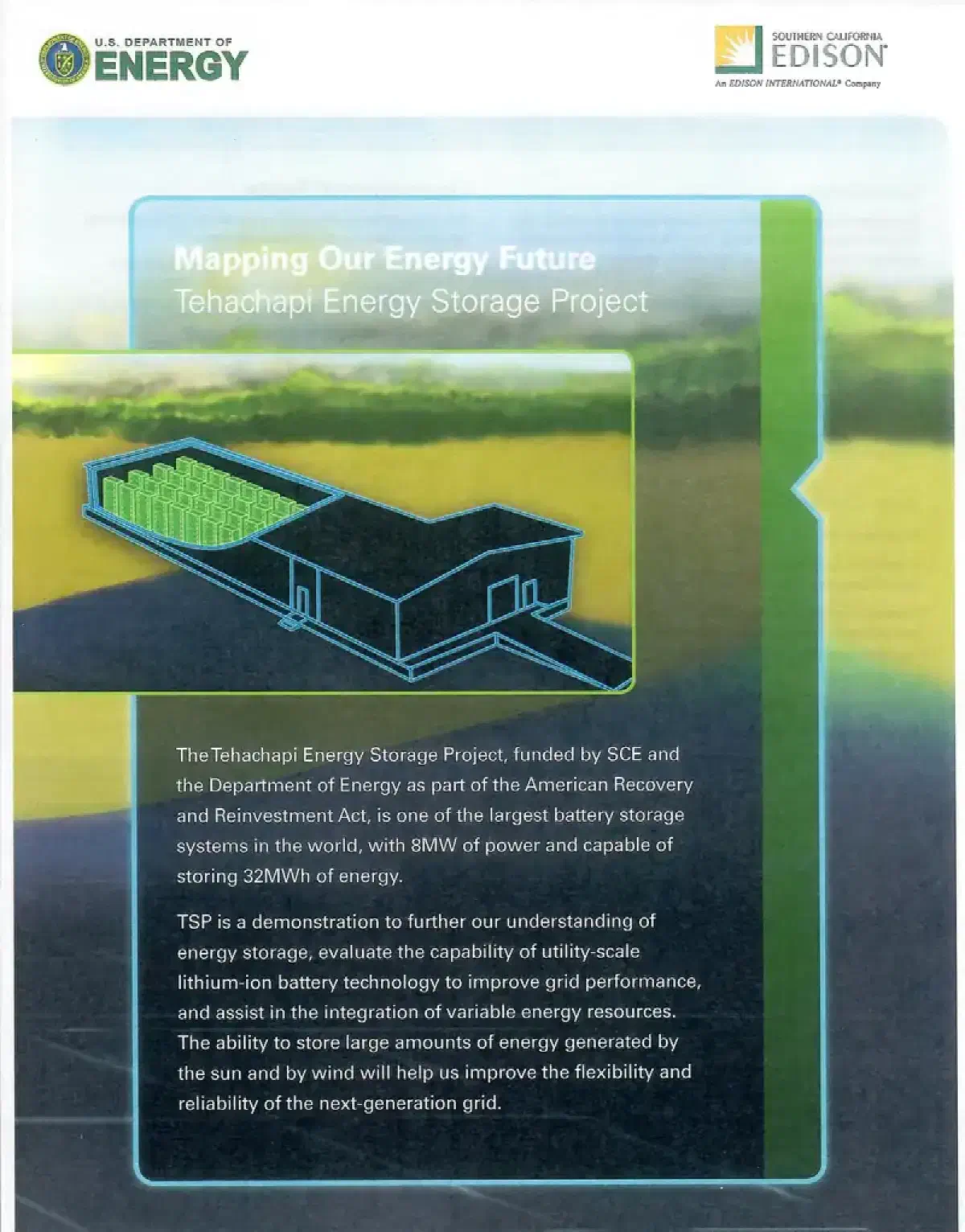
- Lithium-ion costs more up front. In return it packs more energy into less space, lasts longer, and charges quickly. It is the usual pick for residential and commercial storage today.
- Nickel-cadmium is durable and dependable, with a lower energy density than lithium.
When you compare specific batteries, look at four numbers: capacity, voltage, cycle life, and cost. Capacity tells you how much you can store. Voltage has to match the rest of your system. Cycle life, the number of charge and discharge cycles before the battery fades, drives the real cost over time far more than the sticker price does.
Maintenance is not optional. Watch the state of charge and the voltage regularly, and follow the manufacturer’s guidelines for the specific chemistry you bought. A bank that is left to sag to empty again and again will not last as long as one that is monitored and kept within its limits.
Pumped hydro #
Pumped hydro stores energy as height. When you have surplus electricity, you use it to push water from a lower reservoir to an upper one. When you need power, you let the water run back down through a turbine. It is one of the most efficient and longest-lived forms of storage, with a very large capacity.
The catch is obvious: you need two bodies of water at different elevations and the money and permission to build around them. Most of the installations are grid-level. A prepper with a pond on a hillside and a creek below might think about a small version, but for nearly everyone this is background knowledge rather than a shopping list.
Thermal storage #
Thermal systems store heat or cold rather than electricity. Excess energy from solar thermal collectors, or from any renewable source, is held in a medium and released later for space heating, cooling, or hot water. There are two main approaches. Sensible heat storage warms a solid or liquid, such as rock or molten salt, and draws on that heat later. Latent heat storage uses a phase change, for instance a substance melting from solid to liquid and absorbing energy as it does so.
For a home, thermal storage makes the most sense where the load you want to cover is itself heat. A tank of hot water charged by the sun carries a household through the evening without the energy ever being converted to electricity and back.
Flywheels and compressed air #
Two further technologies appear in most overviews, though neither is practical for a typical homestead.
Flywheels store energy as motion in a heavy, fast-spinning rotor and release it as electricity when needed. They respond very quickly and deliver short bursts of power, which makes them good at steadying a grid or smoothing out renewable output, and poor at carrying a house through a long night.
Compressed air systems push air into underground caverns or pressurized vessels and let it expand through a generator later. They suit large-scale storage at relatively low cost. Like pumped hydro, they belong to utilities more than to individuals.
Comparing the options #
| Characteristic | Battery storage | Pumped hydro | Thermal storage |
|---|---|---|---|
| Efficiency | High | Very high | Moderate to high |
| Lifespan | 5-15 years | 30-50 years | 20-40 years |
| Storage capacity | Small to large | Large | Small to large |
| Cost | Moderate to high | Moderate | Moderate to high |
Read the table with your own constraints in mind. Pumped hydro wins on lifespan and capacity but needs a site most people do not have. Batteries lose on lifespan and win on practicality. Thermal storage is the specialist, strongest where the end use is heat.
What to weigh before you buy #
Capacity. Work out your daily consumption and your peak demand. Bigger banks suit properties with heavy loads, while a smaller one can be plenty for modest use.
Round-trip efficiency. Some energy is lost every time you store and retrieve it. Round-trip efficiency compares the total energy you get out with the total you put in, and it is a more honest measure of performance than a headline efficiency number. A high figure means more of your harvest ends up in your appliances.
Cost and payback. Add up the purchase price, installation, ongoing maintenance, and the savings on your bills, then look at the payback period instead of just the upfront cost.
Scalability. Choose technology you can expand. Needs change: a new freezer, a workshop, another household member. A system that accepts more capacity without a full rebuild saves you from buying twice.
Durability. Reputable manufacturers, solid warranties, and clear maintenance requirements matter more than a low price on something that fails in year three.
Putting a system in place #
Start with a site assessment. Look at sun exposure, wind patterns, and water availability, and note the orientation and shading of any panels or turbines. Storage can only hold what your generation delivers, so a poorly sited array will undermine even a well-chosen battery bank.
Next, size the system to your needs. List the appliances and devices you must run during an emergency, estimate their daily consumption and peak draw, and size the storage to cover that with margin. Lifestyle matters as much as arithmetic here, because a household that can live without the dryer needs a smaller system than one that cannot.
Then add an energy management system. Monitoring tools and battery management systems let you track production, consumption, and storage in real time. They also let you shift loads, running the pump or the washing machine when generation is high instead of at dusk.
Plan for the day the system falls short. A backup generator, a fuel reserve, or a grid tie-in gives you a way through an extended outage or a long stretch of poor weather. Storage is a buffer, not a guarantee, and a prepper’s plan should have a layer underneath it.
Finally, keep up with inspections and monitoring. Follow the manufacturer’s recommendations for battery maintenance and system checks, and watch your production, storage levels, and consumption for drift. Falling capacity or odd voltage readings are early warnings, and catching them promptly is far cheaper than replacing a failed bank. If you are unsure about system sizing, equipment selection, permits, or safety standards, bring in a qualified installer. Mistakes in wiring a large battery bank carry real risk.
Choosing where to start #
For most households the answer is a lithium or lead-acid battery bank sized to the essentials, with monitoring, a backup generator, and room to grow. Thermal storage is a sensible add-on when hot water or space heating is a major load. The grid-scale technologies are worth knowing about, but your own energy resilience will come from a well-sited array, a well-sized and well-maintained battery bank, and a plan for what happens when both run low.
For the wider picture, see the self-reliance hub, which ties power, shelter and off-grid living together. Related reading: Techniques For Efficiently Managing Renewable Energy Sources and What Are The Fundamental Electrical Skills For Off-Grid Living.