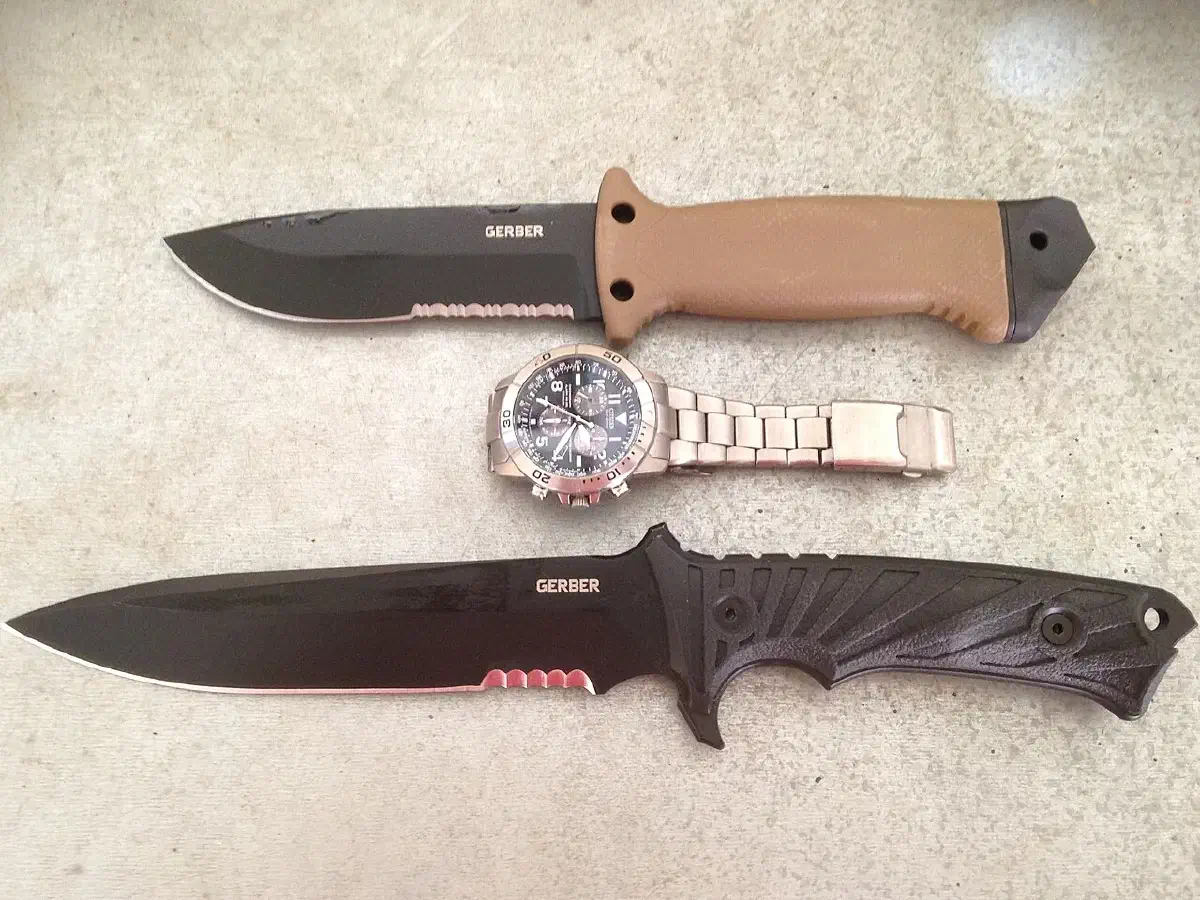
A survival knife is more than a cutting tool. It is the item most likely to replace several others in your pack, which cuts the weight you carry. In the field it can build a shelter, shave tinder for a fire, make cordage, clean and prepare game, cut a bow drill and carve tools for hunting or fishing. The polished flat of the blade can even throw a flash of light as a signal.
The hard part is choosing one. The word “survival knife” covers everything from a pocket folder to a machete. This guide works through seven common knife types and what each is good for, then reviews five specific models, then covers how to decide.
What a survival knife has to do #
Hikers, campers and anyone traveling through unfamiliar ground should carry one, because the trip rarely goes exactly as planned. You may need it to hunt, make camp, start a fire or defend yourself. A good survival knife works as both a tool and, if it has to, a weapon, and the extent of the challenges you expect should decide how heavy and how large it is.
Not just any blade will do the work. You want strong steel, an edge that stays sharp, a comfortable grip and a design that is safe to use. Depending on size, a knife can sit on your belt, inside a boot or in your rucksack.
Seven kinds of survival knife #
Folding knives #
A folding knife is not as strong as a fixed blade, but its size is the advantage. It fits in a pocket and works for light camping and hiking trips where a full-size fixed blade is excessive. Think of it as a good emergency option, and as the knife to carry if you can’t carry anything larger.
Survival knife kits with sheath #
These fixed blades come with a sheath that holds survival essentials: a compass, matches with a striker pad, fish hooks and a sharpening stone. For hunting, fishing, camping or hiking they cover several needs in one package. The caution is quality. The extras can be light-duty, so treat them as a backup to your main supplies.
Tactical knives #
Tactical knives are built for serious trouble. If you expect rough encounters with wildlife or have major safety concerns, a tactical knife is one of the best self-defense choices, and it also does camping and hunting work. Blades come in serrated, double-edged and straight-edge versions, and in combinations of the three. They last well and come in a range of blade and handle materials, so choose according to what you will ask of it.
Tanto knives #
The tanto is named for a Japanese short sword and has a similar profile. Its point is thin, like drop point knives, Bowie knives and daggers. That makes it suited to slicing, cutting and piercing. It is a durable design that tolerates repeated use, so it is a reasonable choice for everyday carry in the wild.
Boot knives #
A boot knife is a backup. It is usually 3 to 5 inches long, double-edged and fixed-blade, and it rides inside a boot. Its small size makes it a last option, but that is the point: it is the knife you still have if you lose your pack.
Kukri #
The kukri comes from Nepal and has a heavy, inward-curved blade with a single cutting edge. It is the fighting knife of the Gurkha army, which is why it is also known as the Gurkha knife. It sits somewhere between an axe and a knife. The curve and weight cut through thick brush and vines and can take down small trees and branches. The spine is wide enough to hammer with if you strike carefully.
Karambit #
The karambit began as a Southeast Asian farming tool for cutting grass, digging roots and planting rice. Its blade is sharp and curved, in single, double or triple-edged versions, and its curve is modeled on a tiger’s claw. A finger ring at the base of the hilt gives the grip extra security while you cut. Traditional hilts used wood, ivory or water buffalo horn. It is lightweight and easy to carry, and pocket versions clip to a pocket or belt.
Five survival knives worth a look #
These five models appear in our review for being strong, sharp and durable. The list is not exhaustive, and you are free to add better ones.
A-1003 fixed blade knife #
The A-1003 was designed as a combat knife for the US Army. It has a drop point blade made of 440 heavy-duty stainless steel, full-tang for strength. The blade is 5-1/2 inches long with saw-back serration and a razor-sharp front edge, which cut through thick material. Impact-resistant G-10 handle scales have finger grooves and a thumb rest. The knife is designed for use with the MOLLE system and comes with a protective sheath.
Spyderco Tenacious plain edge #
“Tenacious” means holding fast, and this folder lives up to it. The handle is black G-10 laminate, comfortable and durable in all conditions. A groove allows quick opening and the mid-size model has a snap-click action. You can close it without using both hands. The blade is a leaf-shaped stainless steel, ground flat from spine to cutting edge. An oversized round hole and textured spine jimping let you open it and rest your thumb for a slip-free grip.
Disaster survival machete and rescue knife #
This is a set. It includes a 24-inch Colombian machete with a thick full tang and an all-black 18-inch blade that keeps its edge under heavy use. The injection-molded handle is soft and non-slip even in hot conditions, with a looped wrist lanyard. The rescue knife handles smaller jobs. It measures 8-1/8 inches, with a stainless steel handle reinforced with G-10 inlays and a 3-1/4 inch camo-coated stainless blade with a piercing tanto point. Both come with protective sheaths.
KA-BAR full-size US Marine Corps fighting knife #
This is the knife the US Marine Corps chose. It is a fixed blade with a comfortable leather handle and a gold-plated brass guard and pommel. The 7-inch blade is 1095 Cro-Van steel, built for sharpness and durability, with no serrations. It slices, cuts and chops, works for hunting and food preparation, and is a serious combat knife if you need one. The sheath is genuine leather, which protects the blade and keeps the edge.
Smith & Wesson 8 inch Special Ops M-9 #
The M-9 is marketed as a fighting knife, but it works well as a survival knife for preppers. Unlike the G-10 handles above, it has an all-weather ABS grip that is rugged and comfortable. The blade is 8-inch spear point 420J2 stainless steel with a spine notched for grip and a large blood groove. It comes with a sharpening stone and a wire cutter.
Reading the specs #
A few terms on the spec sheets above decide how a knife behaves in the field.
Full tang. The steel of the blade runs through the whole handle. A full-tang knife like the A-1003 or the machete in the disaster set tolerates prying and chopping that would snap a partial-tang blade at the handle.
Steel type. The models above use 440 stainless, 1095 Cro-Van and 420J2 stainless. Stainless steels resist rust, which helps in wet climates and when the sheath gets damp. High-carbon steel like 1095 usually takes a keener edge and is easy to sharpen in the field, but it needs wiping dry and a light coat of oil to avoid rust. Neither is simply better. Decide whether you would rather maintain the blade or accept a softer edge.
Serrated or plain edge. Serrations, like the saw-back on the A-1003, bite through rope and tough fibers quickly, but they are harder to sharpen. A plain edge is easier to keep sharp and better for carving, feather sticks and food. The KA-BAR and the Spyderco Tenacious are both plain-edge designs.
Handle material. G-10 and ABS grips stay secure when wet and do not swell or crack in heat or cold. Leather looks good and feels warm in the hand but needs more care.
How to choose #
Pick the knife by matching it to the work you expect, not to the list of features.
- For minimal weight, a folder or a boot knife costs little to carry.
- For general wilderness use, a full-tang fixed blade in the 5 to 7 inch range, like the A-1003 or KA-BAR, covers most of the tasks.
- For clearing brush, the kukri or a machete does the job that a normal knife can’t.
- For self-defense concerns, a tactical knife or a karambit offers more, but practice with it before you trust it.
Remember that survival means surviving the terrain, the animals and sometimes other people. A good knife should work as a tool first. Whatever you choose, keep it sharp, keep the sheath dry and practice basic skills such as carving feather sticks, batoning small wood and processing game before you need to do any of it for real.
For related reading, see why there is no perfect survival knife, hatchet versus knife, seven ways to use a survival knife, and the survival skills hub.