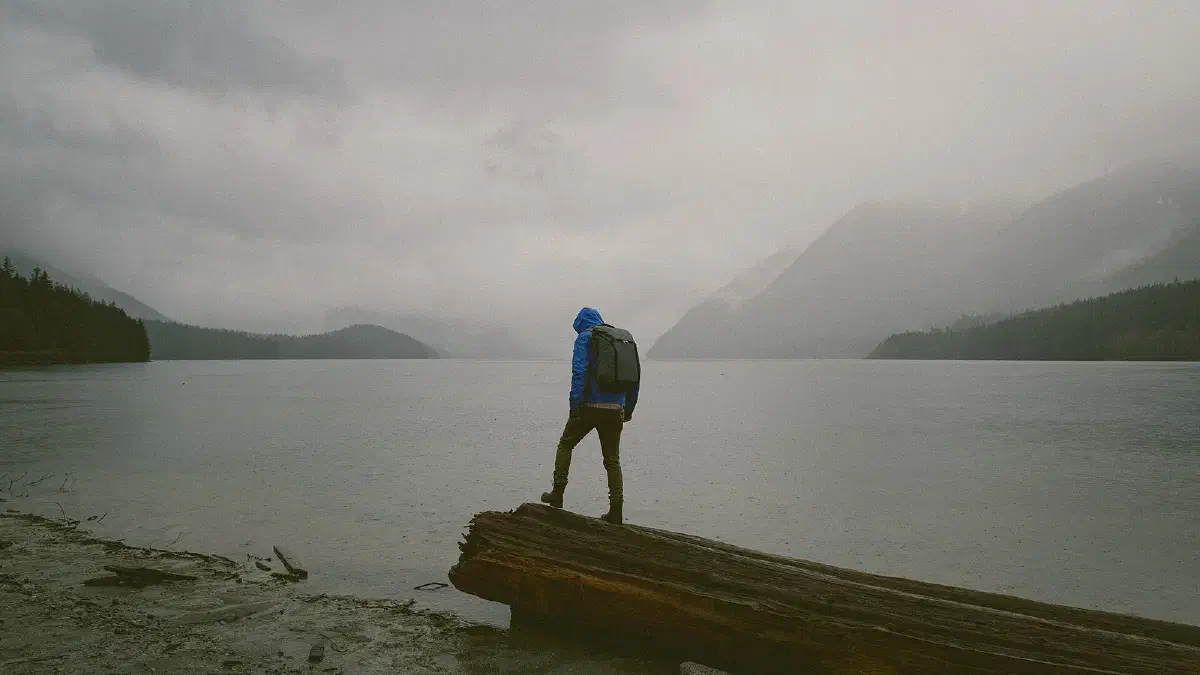
A sudden downpour in the middle of a hike can leave your tent, sleeping bag, clothes, phone and wallet soaked. Wet gear is heavy, it is uncomfortable, and it can damage electronics, break down fabric and encourage mold. In cold weather it can also contribute to hypothermia. Keeping gear dry is not a luxury. It is part of how you stay safe.
Waterproofing works in layers. You treat the surfaces of the gear itself, seal the seams where water gets in, pack the things that must stay dry into containers that keep water out, and wear clothing that sheds rain. None of these steps is hard, and most can be done at home before a trip.
Why dry gear matters #
Soaked equipment adds weight to your pack, and a wet sleeping bag or jacket stops insulating. On a multi-day trek, a heavy rain that soaks your tent, bag and clothes at once turns a miserable afternoon into a risk. Electronics are the most vulnerable. A phone, camera or GPS unit can fail the moment water gets in, and fabrics lose their performance as they absorb it.
Looking after your equipment also pays off over time. Treating gear before it fails costs far less than replacing it.
Waterproofing sprays #
A spray is the simplest way to improve the water resistance of fabric. It leaves a protective layer on the surface that repels water and keeps it from seeping into the material. You can use it on tents, backpacks, jackets and hiking boots, and it goes on in minutes.
The process is the same for most products:
- Clean the gear first. Dirt and grime stop the treatment from bonding properly. Use a mild detergent and water, then let the item air dry completely.
- Apply the spray evenly, following the manufacturer’s instructions, and cover the whole surface. Pay particular attention to seams, zippers and other weak points.
- Let it cure. Give the gear the time the product asks for, and keep it out of humid places while it does.
- Test it. Sprinkle some water on the treated surface. If the water beads and rolls off, the treatment is working.
Different sprays suit different materials:
| Type | Best for |
|---|---|
| Silicone-based | Tents, backpacks |
| Durable water repellent (DWR) | Clothing, footwear |
| Fluoropolymer-based | Outdoor gear |
Choose according to the gear you are treating. A spray made for tents is not necessarily the right thing for a jacket.
Wax for leather #
Leather boots and jackets respond better to wax than to spray. A wax-based product gives a durable waterproof coating and also conditions the leather, which extends its life. One caution: wax can darken lighter materials, so test it on a small hidden area first.
Seam sealing #
Seams are the weak point of most waterproof gear. Wherever two pieces of fabric are stitched together, there are needle holes, and water can pass through them. This matters most for tents, tarps and rain jackets.
To seal them:
- Find the seams, paying attention to every place where two pieces of fabric are stitched together.
- Clean them with a damp cloth or brush to remove dirt, debris and any old waterproofing residue.
- Apply a seam sealer so that it covers the seam completely.
- Let it dry and cure according to the instructions before using the gear in wet conditions.
Seam sealers come in a few forms:
| Type | Best for |
|---|---|
| Seam tape (pressure-sensitive) | Tents, rain gear |
| Liquid sealant (urethane-based) | Backpacks, tarps, jackets |
| Seam sealer pens | Small repairs, quick fixes |
Sealants are flexible, so they stop leaks without stiffening the material. They are also useful for patching small tears and holes in waterproof gear. Sealed seams extend the life of the item and save money in the long run.
Waterproof bags and cases #
Not everything can be treated with a spray, and some items need complete protection. Dry bags, waterproof backpacks and phone cases keep belongings safe in conditions that would soak anything else.
| Type | Best for |
|---|---|
| Dry bags | Camping, boating |
| Waterproof backpacks | Hiking, commuting |
| Waterproof phone cases | Water activities, travel |
To get the full benefit:
- Choose the right size. The bag or case should fit your gear snugly.
- Seal it properly. Check the closure and make sure it is shut tightly.
- Test it for leaks. Before you go, fill it with paper towels and submerge it in water. If the towels come out dry, it works.
Some bags float, which can save your belongings if you drop them into water. A dry bag or waterproof liner inside a regular pack is also a good way to protect items on the move. Test the waterproofing of electronics cases before every trip, because seals wear out.
Waterproof clothing #
The right clothing keeps you dry and warm, whether you are hiking, skiing or camping. The main pieces are:
| Type | Best for |
|---|---|
| Waterproof rain jacket | Hiking, camping, commuting |
| Rain pants | Outdoor work, cycling, fishing |
| Rain poncho | Backpacking, emergency shelter |
When you shop, consider four things:
- Waterproof rating. Look for a high rating, which is expressed in millimeters.
- Breathability. Breathable fabric lets sweat and condensation escape. Without it you get wet from the inside.
- Durability. The material has to hold up to rough outdoor use without losing its waterproofing.
- Fit. The clothing should leave you enough freedom of movement.
Waterproof jackets, pants and even socks add a layer of protection to fabrics that already resist water to some degree.
Match the method to the item #
No single treatment covers everything, and a few pairings are worth remembering.
A tent needs the most attention because it faces rain for hours. Spray the fly, seal every seam, and check the floor, where abrasion from the ground wears the coating first. A backpack is different. Its fabric can be sprayed, but the zippers and stitching remain weak points, so the contents are better protected by a dry bag or liner than by the pack itself. Boots depend on the material: leather takes wax, while fabric and synthetic boots take a spray. Rain jackets get a DWR refresh, with sealant on any seam that has started to lift.
Electronics are the exception. Do not rely on a spray for a phone or camera. Put them in a case or bag made for the purpose, and test that case before you trust it.
Common mistakes #
Most failures come from a few habits:
- Treating dirty gear. The product sits on the grime instead of the fabric and washes off with the first rain.
- Skipping the cure time. Gear used wet before the coating has bonded gets less protection than it should.
- Ignoring seams and zippers. Water finds the stitching first, however well the panel is treated.
- Trusting a bag you have not tested. A closure that looks sealed can still leak, and the paper towel test costs nothing.
- Storing gear damp. Water damage includes mold, and a tent packed away wet can be ruined before the next trip.
Drying and storage #
Waterproofing does not remove the need to dry things out. After a wet trip, hang the tent, sleeping bag and clothing to dry fully before packing them away. Store them somewhere dry and not in a humid corner, since moisture is what lets mold start. Then inspect the gear while you put it away, so any repair is done before the next outing and not in the rain.
Buy waterproof from the start #
When you shop for new gear, prefer items that are already waterproof or water-resistant. It saves time and effort later. Look for sealed seams, waterproof zippers and other features that give extra protection.
Keep it maintained #
The waterproofing on any piece of gear wears down over time. Inspect your equipment regularly and reapply treatments as needed. The warning signs are dark spots or dampness on fabric that used to stay dry, which means the material is absorbing water. Act on those signs before the item fails in the field.
A simple routine #
For a trip, a sensible routine looks like this. Clean and treat fabric gear a few days before you leave, so there is time to cure. Seal the seams on tents, tarps and jackets. Pack electronics, spare clothing and the sleeping bag in dry bags. Carry a rain jacket you trust. Then recheck everything after the trip, and reapply as needed.
With these habits you can head into the weather without worrying about it.
Related reading: the full survival skills guide; Strategic Layering: Dressing for Survival in Extreme Conditions; Crafting A Self-Sufficient Wardrobe: Clothing And Gear For Survival.