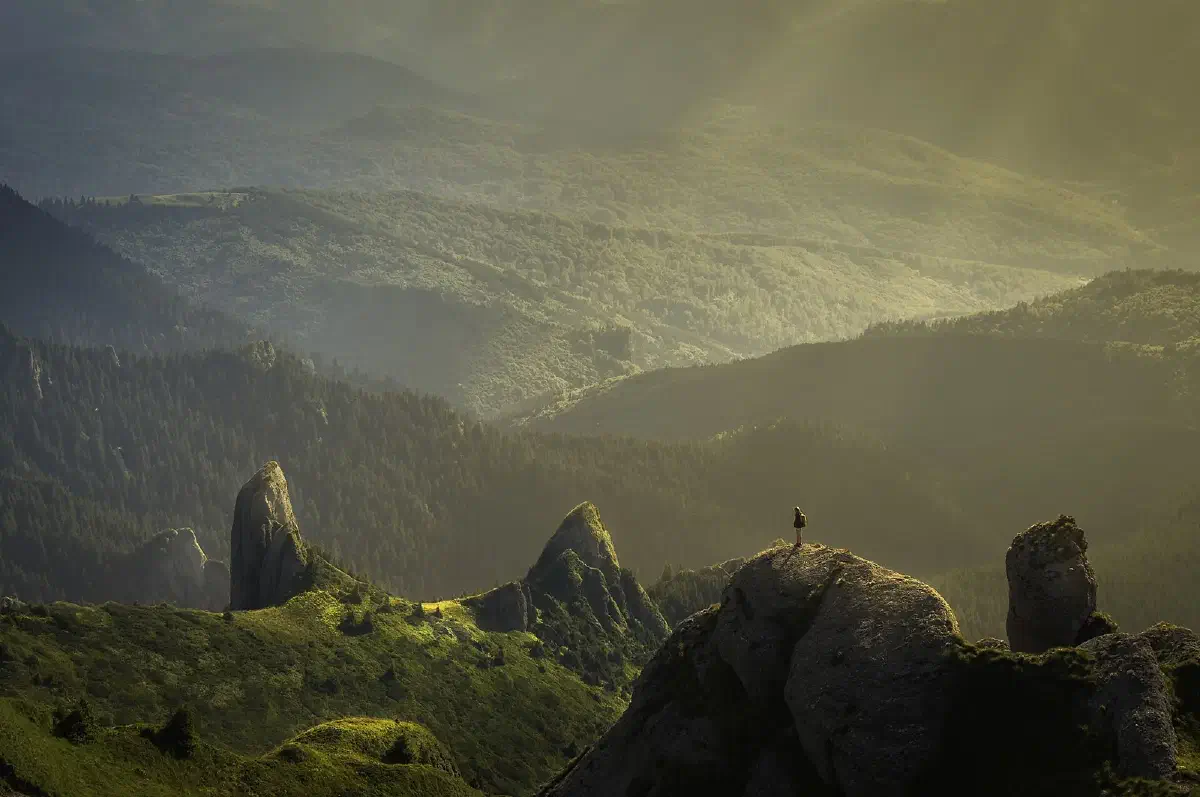
Running out of supplies is not the same as running out of options. Food bars, fuel and bottled water are conveniences. What keeps you alive is a short list of needs: staying calm, warmth, shelter, water, food and a way to be found. People have met all of these with almost nothing in their hands, and the skills involved can be learned and practiced before you ever need them.
This guide goes through those needs in rough order of urgency, and adds the gear that is worth keeping in a pocket even when the pack is gone.
Control your thinking first #
Many bad outcomes in the wilderness come from panic, not from the terrain. If something is not working, such as a shelter that keeps collapsing, do not rush. Stop, take a deep breath, and work out what you actually need. Look around, take stock of your surroundings and make a new plan.
Set your priorities in order. Exposure and cold come ahead of thirst, thirst comes ahead of hunger, and getting rescued tops them all. Staying focused and calm lets you think straight and see what needs to be done first. Most people who get through a bad night outdoors are the ones who stayed methodical.
Shelter #
The most common cause of death outdoors is losing body heat, so shelter comes early. Your site matters: it should have enough building material nearby, protection from wind, and ideally a water source close by. Above all, check for hazards overhead. Falling trees and branches cause a large share of forest accidents.
You have several options:
- Natural shelters. Caves, overhanging cliffs and large trees make good emergency shelter. A cave may already have occupants, so look carefully before you go in. If you stay in one for long, a fire at the entrance made of small branches or dry sticks helps keep animals out.
- Under big trees. In dense forest, make a roof from boughs or a tarp beneath a large tree.
- A lean-to. This is among the simplest and most popular options, and you can make one from almost anything. Lean a large branch or a rope-supported pole against a tree, then cover it with a tarp, plastic sheet or blanket. Branches, bark and leaves also work.
- A fallen tree or a sharp rock face. You can use the branches of a fallen tree, pine needles, or the lee side of a rock to form a sheltering wall.
If you must keep moving in search of food and water, you will have to build more than once, so get good at fast, simple shelters. An emergency blanket, drinking water and an extra food source are the first things to get settled.
Fire #
Fire keeps you warm, cooks food, boils water, keeps animals away and signals your position. Do not assume you will always have matches or a lighter. Learn to make fire by traditional methods too.
Choose your ground carefully. Sandy or rocky ground reduces the risk of starting a forest fire. If you do have tools, waterproof matches are the best option, and a backup lighter or two takes up almost no room. Flint and steel is a classic method. You can also focus sunlight onto tinder with eyeglasses, binoculars or a camera lens, blowing gently when it begins to glow. The fire-plow technique, which rubs a hardwood shaft along a groove in a softer board, is an effective friction method but takes practice, and the bow drill is another.
Prepare your fuel before you try to light anything. Dry bark, grass and kindling are good starters, and in damp or stormy conditions you will want a stock of dry tinder set aside. Think about ventilation if you build near or in the shelter, so you do not choke on smoke.
Once the fire is going, ring it with stones. Rocks that you heat in the fire hold warmth after the wood is gone, and can also be used to heat water.
Water #
A person can survive longer without food than without water, so look for it as soon as your supply runs low. Streams, rivers and springs are the first places to check. Running water is generally a better bet than still water. Ponds and lakes can harbor organisms that will make you very sick.
Purify whatever you collect. Boiling is the most reliable method, and water purification tablets work if you have them. Always carry more than one means of purification in case you lose one. If you have none at all, traditional methods include filtering through cloth, clay vessels, and plant material, then boiling. You can also collect rainwater, gather dew in the morning, and funnel water from large leaves into a container.
Food #
Wild food is there, but you need the skills to use it.
Plants. Learn which herbs, berries and nuts are edible in your region, and which look similar but are poisonous. Some trees have edible inner bark. Be cautious, and do not eat things you cannot identify. Insects, eggs, fruit and green leaves can all be useful sources of food when handled carefully.
Fish. If there are lakes or rivers, fish are a reliable source of protein. Carry some fishing line and hooks, and learn how to use them.
Traps. Building simple traps is more efficient than chasing animals. Traps work by choking, crushing, hanging or entangling the animal, in a snare or a pit. The more traps you set, the better your odds, and the best spots are along animal trails. Watch the routes animals use to increase your chances.
Cooking. Without utensils, you can improvise. A makeshift grill from scrap metal or a flat rock on high ground will cook fish or meat. Keep a waterproof container or bag for storage.
Animal remains. If you find a carcass, learn how to use it. Bones can serve as simple tools, and skin can provide shade, insulation, bedding or part of a shelter.
Be found #
Do not rely on walking out. Signal for help.
Smoke. A fire in a visible spot, kept going for a long time, will draw attention. Throwing fresh grass or green leaves onto the fire makes it smokier, which helps during the day. A short-lived puff is easily missed, so keep it going.
Light and color. A mirror flash stands out against the steady brightness of the sun. Bright items hung from tree branches at height are also visible. Keep a fire burning at night.
Sound. A whistle or horn contrasts with the noises of the forest. Three blasts is a widely recognized distress signal. Shouting is less effective and costs you energy.
Moving and finding direction #
When you decide to move, pick your moment. Avoid traveling in the dark. Many predators are nocturnal, and you are also more likely to injure yourself on the terrain. Wait for first light.
If you have no compass or map, you can use the sun. Place a stick upright in the ground, mark the tip of its shadow, wait a while, and mark it again. The line between the two marks runs roughly east to west. Then choose a direction and keep to it, rather than wandering. For more on this topic, see a dedicated navigation guide.
Weather #
You will need to anticipate weather without a forecast. If wind is coming, put your shelter in a protected place. If it is going to be cold and wet, build a fire that can survive the rain. Dark clouds and a shifting wind can mean a storm is on the way. In hot weather, rest in shade during the hottest hours and conserve your sweat.
First aid without a kit #
You may well lose your first aid supplies, and in the wilderness you are in constant contact with wild animals and insects. For a bite, wash the surface thoroughly with water, keep the person calm and still, and get professional help as quickly as you can. Learn how to splint a broken bone with sticks and cloth.
If you do carry a kit, it should include plasters and bandages, sterile gauze, surgical tape, tweezers, antiseptic wipes and an over-the-counter pain reliever. Gauze is a general-purpose tool, and individually wrapped sterile squares are the most convenient.
Some plants have a long history of medicinal use. Dock leaves can be used for insect bites. Willow bark contains salicylic acid and can be chewed for headaches. Burning eucalyptus leaves can help keep mosquitoes away. Be sure you know a plant before you use it, and avoid poisonous ones.
What to keep on you #
If you can only keep a few things when everything else is gone, these are the best choices:
- A knife. A decent knife or multitool is among the most important tools you can have. Look for a fixed blade rather than a folding one, a full tang so the metal runs the length of the handle, and a blade of about four to six inches. Serrations help, but are not essential. You will use it to cut, carve, chop and make other tools.
- An emergency blanket. This thin mylar sheet reflects body heat. It is useful if you lose or soak your sleeping bag, and it doubles as a signal reflector.
- Fire and water. Matches or a lighter, and a way to purify water.
Many people who get into trouble outdoors misjudge the difficulty of the trip or overestimate their own skills. Be realistic about what you can do, plan accordingly and practice these skills at home. If you can meet your basic needs, which are water to drink, food to eat, shelter to sleep in and fire to cook and keep warm, you can survive alone. Then call for help and wait for rescue.
Related reading: the full survival skills guide; Basic survival skills everyone should know; 8 Basic Survival Skills You Can Learn in Your Own Backyard.