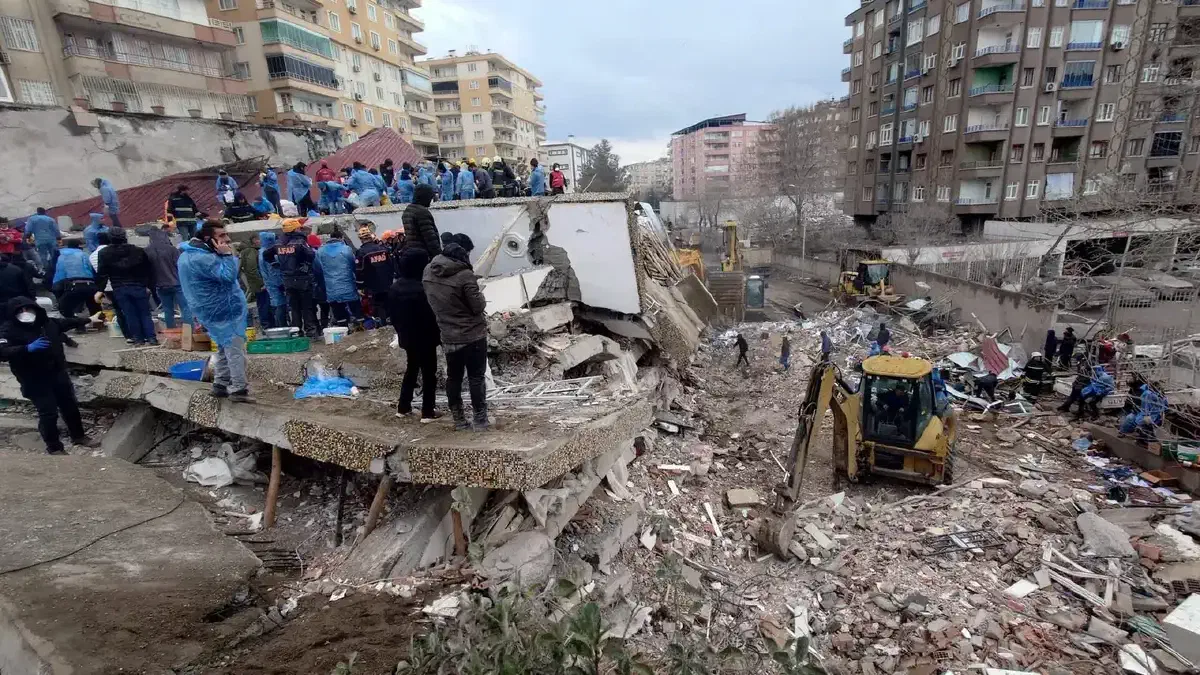
Earthquakes give no warning. There is no approaching front, no forecast cone, and no time to board up windows. That is exactly why the work has to be done in advance: the house secured, the kit packed, the family plan rehearsed. What you do in the first few seconds of shaking and what you have prepared beforehand largely decide how the event goes.
What an earthquake is #
An earthquake is a sudden release of energy in the Earth’s crust that sends seismic waves rippling through the ground. The cause is the movement of tectonic plates, the large sections of crust that slowly shift and grind against one another. The boundaries where they meet are fault lines. When stress along a fault becomes too great, the rock ruptures and the ground shakes.
Most earthquakes are tectonic, caused by stress released in a sudden rupture along a fault. Volcanic earthquakes, caused by the movement of magma beneath the surface, are another type. Both can damage buildings, roads, and utilities, and both can trigger secondary problems such as gas leaks and fires.
Know your risk #
Earthquake-prone regions lie mostly along major plate boundaries, such as the Pacific Ring of Fire, and near active volcanoes, where volcanic activity often coincides with seismic activity. But damaging quakes occur in other places too, so check rather than assume.
- Follow recent earthquake activity through local geological agencies such as the United States Geological Survey (USGS), which publish magnitudes and locations.
- Look up the building codes in your area. Many places require construction standards designed to make structures more resistant to earthquake damage, and it is worth knowing whether your home was built to them.
Secure your home #
Most earthquake injuries come from things in the house falling or shifting, not from the building collapsing. That makes this the highest-value work you can do.
Furniture and appliances #
Walk through each room and ask what would fall, slide, or topple. Anchor heavy furniture and appliances to the walls and floor with straps, brackets, or adhesives. Give particular attention to tall and top-heavy pieces such as bookcases, wardrobes, and refrigerators. Secure shelving units to the wall with brackets or anchors, keep heavy items on lower shelves, and distribute weight evenly.
Install latches on cabinets so they do not fly open and spill their contents. That prevents injuries and also protects whatever is inside.
Water heaters and gas #
Water heaters are among the most dangerous items in a quake, because a toppled one can rupture water and gas lines. Strap the water heater to the wall with metal strapping or brackets. Anchor gas appliances securely and have flexible gas lines installed so they flex rather than break. Know where your gas shutoff is and how to use it.
Chimney and structure #
Chimneys are particularly vulnerable and can collapse in a quake, so have a professional inspect yours and make any reinforcements. If you live in a high-risk area, consider retrofitting the house itself:
- Foundation. Strengthening the foundation, using steel beams, concrete footings, or other materials, helps the house absorb seismic energy.
- Walls. Adding steel braces or plywood sheathing makes walls more resistant to collapse.
- Roof. Metal connectors, bracing, and other reinforcements help keep the roof attached.
These jobs are not do-it-yourself projects for most people. Hire a qualified contractor, and ask your local building department what is recommended.
Identify safe spots #
Walk through your home and identify safe places in each room: under a sturdy table or desk, away from windows, glass, heavy furniture, and fixtures attached to walls or ceilings. Pick a family meeting area inside the home where everyone can gather once the shaking stops, and a second meeting point outside, away from buildings and other hazards.
Make a family plan #
- Meeting points. Choose a spot that is easy to reach and clear of buildings and power lines.
- Out-of-area contact. Phone lines near the quake may be jammed, while a call or text to a relative or friend elsewhere is more likely to get through. Make sure everyone has that person’s details.
- Communication. Agree on how and when you will check in, whether by text, call, or social media, and what information to share first.
- Drills. Practice evacuation and drop-cover-hold-on with the family, children included. Repetition is what makes the response automatic.
Attending an earthquake preparedness workshop run by a local emergency management agency or community organization is a good way to reinforce all of this, and to meet neighbors who are doing the same.
Build your kits #
Keep a kit at home and a smaller one portable. The home kit should hold:
- Water: at least one gallon per person per day for a minimum of three days
- Food: canned goods, dry goods, and ready-to-eat meals, with a manual can opener
- Light: flashlights and extra batteries. Use flashlights rather than candles, which are a fire hazard if there are gas leaks.
- Information: a battery-powered or hand-crank radio
- Medical: a first aid kit with bandages, adhesive tape, antiseptic wipes, pain relievers, scissors, and tweezers, plus essential prescriptions
- Hygiene: toilet paper, soap, hand sanitizer, toothbrushes and toothpaste, and items such as feminine hygiene products, diapers, and baby wipes where they apply
- Documents: identification, passports, insurance policies, and medical records in a waterproof, easily reachable container
Store extra water in food-grade containers in a cool, dark place, and rotate your stored food so it stays fresh.
A bug-out bag is the portable version, enough to sustain each person for at least 72 hours. Pack food, water, first aid supplies, medications, clothing, documents, and anything specific to your family’s needs, and keep it where you can reach it quickly.
Plan to leave if you must #
Learn the primary evacuation routes designated by local authorities, and practice driving or walking them. Find out where emergency shelters are and what they provide, which your local emergency management agency can tell you. Roads may be damaged after a quake, so have an alternative.
During the shaking #
The advice is short because the time is short: Drop, Cover, and Hold On.
- Drop to the ground so you are not knocked over.
- Take cover under a sturdy table or desk, shielding your head and neck with your arms.
- Hold on to the furniture until the shaking stops, moving with it if it shifts.
While you are under cover, stay away from windows, glass, mirrors, and heavy furniture that could topple. Do not stand in a doorway or near an exterior wall, because they do not provide the protection people assume. Watch for swinging light fixtures and other falling hazards.
In most cases it is safer to stay inside than to run out. Moving around during shaking exposes you to falling objects and collapsing structures. If you are already outside when the quake hits, move to an open area away from buildings, trees, and power lines.
After the shaking stops #
- Check for injuries to yourself and others, give first aid, and seek professional medical help for serious injuries.
- Check for hazards. Look for collapsed structures, downed power lines, broken glass, unstable building parts, and exposed electrical wiring. If you smell gas, evacuate and call your gas utility from a safe distance.
- Document the damage with photographs or video for insurance.
- Contact emergency services for life-threatening situations, and use your local emergency hotline for other problems. Keep calls short so lines stay open.
- Expect aftershocks, and be ready to drop, cover, and hold on again.
Teach everyone #
A plan only works if everyone knows it. Teach each member of the household, including children, the basics: Drop, Cover, and Hold On, where the safe spots are, and how to secure furniture. Sign up for automated earthquake alerts or download a smartphone app that provides them, and keep watching your local geological agency for updates.
Preparation for earthquakes comes down to a short list: understand the risk, secure the house, stock the kits, rehearse the plan, and know what to do in the first minute. None of it is complicated. All of it is easier before the ground starts to move.
Related reading on this site: securing your home against natural disasters, earthquakes, floods and hurricanes and assessing your home’s readiness. The wider crisis and medical section collects the rest of the emergency-planning guides.