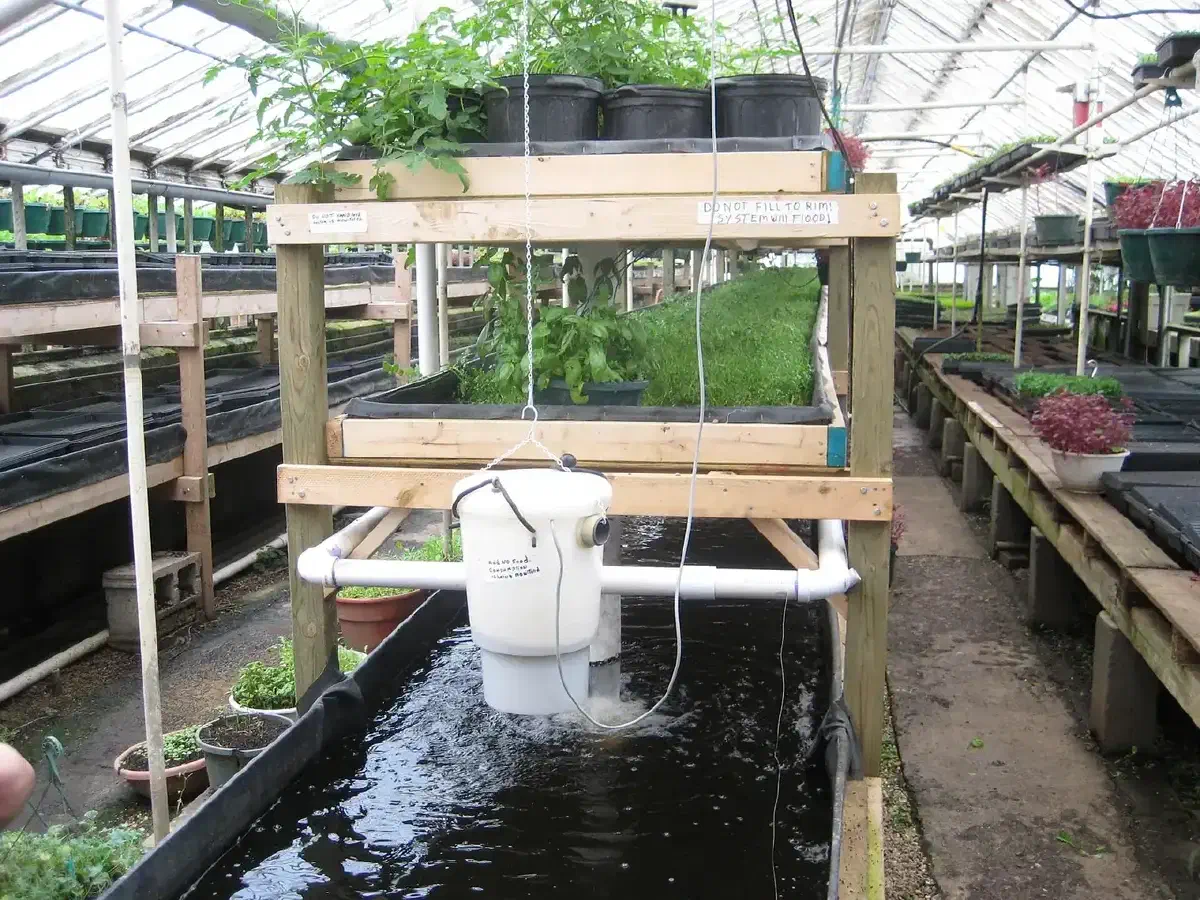
A vegetable bed gives you carbohydrates and vitamins. It doesn’t give you protein. Raising fish alongside your plants does, and it does it in a footprint that fits on a patio, a balcony or a corner of a backyard. That is the case for aquaculture and its most popular cousin, aquaponics, as part of a food plan: a renewable supply of fresh food that you control from start to finish.
This article covers the choice between pond, recirculating and aquaponic systems, then walks through designing, building, running and troubleshooting a small aquaponic setup, since that is the version most people with limited space will actually build.
What these terms mean #
Aquaculture is the farming of aquatic organisms: fish, crustaceans, molluscs and aquatic plants. Instead of relying on oceans and rivers, you build a controlled environment where they grow.
Hydroponics is growing plants without soil, with their roots in nutrient-rich water.
Aquaponics joins the two. Fish waste feeds the plants, and the plants filter and clean the water for the fish. It is a small imitation of a natural ecosystem, and both halves do better because of the other.
Aquaponics also uses much less water than a soil garden, since the water recirculates instead of draining away, and it needs little space. For preppers, the larger benefit is control over quality and safety of your food and a steady supply of protein and nutrients when the grocery store may not be a reliable source.
Pick a system type #
There are three main approaches, and the right one depends on your land, your budget and how much technical work you want to take on.
Pond systems are the simplest and oldest. You dig or build a pond on your property and stock it with fish and plants. Once balanced, it can run on little maintenance. The catch is space and water: you need ample room and, ideally, access to a natural water source. It suits a rural property better than a city lot.
Recirculating systems filter and reuse water continuously. They conserve water, produce high yields of fish and plants in a compact space, and take less room than a pond. They also call for more technical skill and closer monitoring, because a pump or filter failure can harm the fish quickly.
Aquaponic systems are a recirculating system with plant beds added so the plants do the filtering. They make the most of your resources, which is why they’re the common choice for people who want a complete food production setup. The rest of this guide focuses on them.
Plan before you build #
Settle three questions first.
How big? Look at the space you have and the number of people you want to feed. A bigger system needs more resources and more maintenance, so pick a size you can actually keep up. A first system should be small. You can grow it later.
Which organisms? Match the species to your environment, looking at water temperature, pH and whether the species get along. For fish, tilapia, trout and catfish are popular, and goldfish or koi are options if you’re less concerned with eating them and more with starting a working system. For plants, leafy greens like lettuce and herbs like basil do well.
Where? The tank needs a stable footing, since a full tank is heavy. It should get the right amount of sun, but not so much that algae takes over. Indoors, on a balcony, or in a backyard are all possible.
The four components #
Fish tank. The heart of the system. Choose a size to suit your space and your fish. It houses the fish whose waste feeds the plants.
Grow bed. This is where the plants sit, supplied with nutrient-rich water from the tank. You have several options: media-filled beds, nutrient film technique (NFT) systems, or deep water culture (DWC). Choose the one that suits your space and what you want to grow.
Water pump. It moves water between the tank and the grow bed. Pick one sized for your system with enough flow to keep plants healthy.
Plumbing. PVC pipe or tubing connects everything, and it should let water move smoothly from the tank to the bed and back again. Plan the layout so that you can get at joints later.
Putting it together #
- Install the tank. Put it in a stable spot with appropriate light. Fill it with water, then add fish to start the system.
- Set up the grow bed. Place the bed above the tank so that gravity helps the water flow back down. Fill it with your chosen growing medium and add seeds or seedlings.
- Connect the pump. Attach it to the tank and to the grow bed and make sure water moves freely between them. Run it and confirm that water circulates the way you expect before you rely on it.
- Watch and adjust. A new system takes time to settle. Monitor the water quality, plant growth and fish health closely at first, and adjust as needed to keep the ecosystem balanced.
Running the system #
Test the water. Regularly check pH, ammonia, nitrites and nitrates in the tank. Both fish and plants need these in the right ranges, and trouble shows up in the numbers before it shows up in the animals. Also keep an eye on oxygen content.
Feed the fish properly. Look up the nutritional needs of your species and set a feeding schedule. Don’t overfeed: excess food causes water quality problems and health issues for the fish. Remember that fish waste feeds the plants, so looking after the fish is looking after the garden.
Prune the plants. Trim regularly to encourage healthy growth and stop the grow bed from getting overcrowded.
Inspect and clean. Look over every component for wear or blockages, and clean the grow bed and tank when they need it.
When things go wrong #
Algae. If you see excess algae, cut back on the sunlight reaching the tank. Algae-eating fish can help control it.
pH imbalance. An off pH harms both fish and plants. Test regularly and make adjustments to get back to the proper range.
Clogging. If water slows, check the plumbing for blockages and make sure everything flows freely between components.
Disease. Fin rot and fungal infections are common in fish. Prevention comes first: good water quality and not overcrowding. If an outbreak happens, quarantine the affected fish, and get professional help to diagnose and treat the problem.
Nutrient deficiencies. Watch for stunted growth or yellowing leaves, which are the signs. Adjust feeding and nutrient supplementation to correct the imbalance.
Equipment failure. Pumps and plumbing can fail. Be ready for it: keep a spare pump and fittings, because a recirculating system depends on moving water.
Expanding #
After a season or two of steady operation, you may want to grow. You can add species, but research compatibility first, looking at water requirements, feeding habits and growth rates. A more varied stock makes the system more resilient and more productive. You can also add capacity: a bigger pond, additional tanks or grow beds on a recirculating system, or better use of space in an aquaponic setup. Plan changes carefully so the system stays in balance.
Is it worth the effort? #
It’s more work than a vegetable bed, and a failed pump can lose a tank of fish. But if you want a dependable source of protein and vegetables from a small space, and you’re willing to learn water chemistry, it gives you something few other home setups can. Start small, learn how the system behaves, and scale only after it has run well for a while.
Related reading: Food and water; The Future Of Food: Innovations In Hydroponics And Aquaponics For Preppers; The Use Of Vertical Farming Techniques In Prepping; The Role Of Microgreens In Urban Survival Strategies