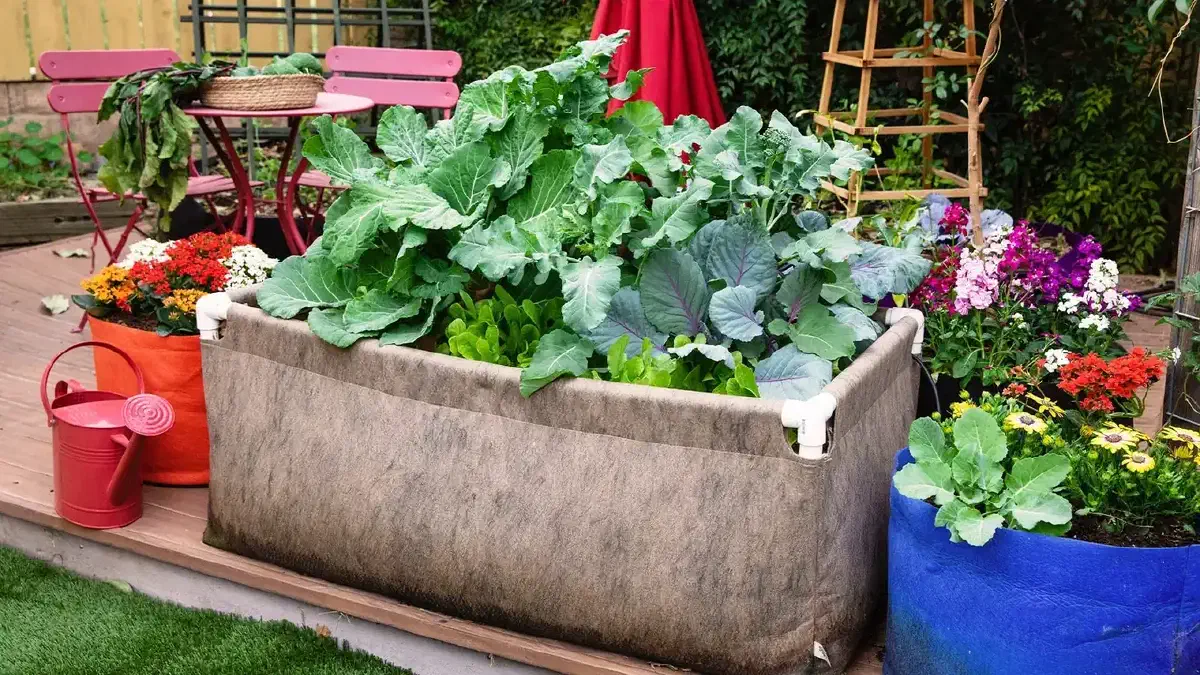
A balcony, a tiny backyard or a sunny windowsill is enough to grow real food. What you give up in square footage you make up for with planning: the right plants, containers that suit them, growing upward, and extending the season so the garden produces beyond summer. This guide pulls those pieces together.
Choose plants that earn their space #
When space is the limit, every plant has to justify its spot. Look for varieties bred or recommended for containers and small gardens, and weigh two qualities above everything else.
Compact growth. Dwarf and compact varieties have smaller growth habits, which suits pots and raised beds. Cherry tomatoes and bush beans are good examples. Check each plant’s size and growth habit before you buy it.
High yield and fast maturity. Choose varieties known for productivity and quick turnaround, so you get a harvest inside a shorter season. Strong candidates for small gardens include cherry tomatoes, leafy greens like lettuce and spinach, and herbs such as basil and cilantro.
If you want fruit, compact trees can grow in containers on a patio or balcony. Dwarf apple, miniature citrus and patio peach trees all fit the bill. Pick varieties suited to container growing, and prune them regularly. Pruning controls the size and shape of the tree, encourages healthy growth and raises fruit yield. Remove dead or damaged branches, thin crowded areas, and shape the tree to encourage fruiting.
Grow up, not out #
When horizontal space runs out, use the vertical. Install vertical planters or hanging baskets on walls, fences or balcony rails and fill them with herbs, leafy greens or strawberries.
Climbing crops should go up trellises or stakes. Tomatoes, cucumbers and peas all take well to support, and training them upward saves ground space. Vining plants such as cucumbers, peas and beans climb naturally and thrive in a vertical setup.
Other small surfaces count, too. Window sills and balcony railings suit planter boxes or railing planters for herbs and flowers. You can also build a living wall by attaching containers or pouches to a trellis or wall. It is a space-saving way to grow a lot of plants, and it looks good.
Get containers right #
Containers are the basis of most small-space gardens. A few rules cover most of the choices.
- Size. Pick a container big enough for the plant’s root system. A cramped root ball limits growth no matter how well you water.
- Drainage. Waterlogging leads to root rot. Containers need drainage holes, or a layer of gravel or broken pottery at the bottom.
- Weight and material. Lightweight, durable options are easier to move around. Plastic, resin, fiberglass and fabric containers are weather-resistant and light. Avoid heavy ceramic or stone, which is hard to maneuver. Portability matters because you may need to shift pots to follow the sun.
- Self-watering systems. Self-watering containers and small hydroponic setups keep a steady supply of water and nutrients going. They are useful if you are short on time or forget to water.
Maximize your light #
Sunlight limits production more than any other factor in small spaces. Identify the sunniest spots, whether a bright window or the part of the balcony that gets the longest exposure, and put the plants that need the most light there.
If light is scarce, mirrors or highly reflective surfaces can redirect more of it onto the plants. If that isn’t enough, use grow lights. Fluorescent, LED and high-intensity discharge lights all supply the spectrum plants need, even in indoor or shaded spaces.
Soil and fertilizer #
Garden soil is a poor choice for containers because it may not drain well or supply the right nutrients. Use quality potting soil, or mix your own from compost, peat moss and perlite.
Plants in containers have limited access to natural soil fertility, so you have to supply it. Amend the soil regularly with organic matter such as compost, worm castings or well-rotted manure. Slow-release or organic fertilizers add a steady supply of nutrients and support microbial activity. Rotate crops from container to container each year to prevent a buildup of pests and disease.
Water efficiently #
Overwatering and underwatering both cause damage: root rot on one side, plant stress on the other. Work out what each plant needs based on variety and conditions.
Soak the soil deeply and less often rather than watering lightly every day. Deep watering pushes roots down and makes plants more resilient, and it cuts evaporation from the surface.
Drip irrigation or soaker hoses deliver water right to the base of the plant and suit container gardens well. Water early in the morning, so plants have moisture before the heat of the day evaporates it. Avoid evening watering, because wet leaves overnight encourage fungal disease.
Make every plant work harder #
Three planting techniques stretch a small garden’s output.
Companion planting. Grow plants together that help each other. Marigolds near tomatoes deter pests, basil near peppers improves flavor, and radishes near lettuce repel insects. Mixing vegetables, herbs and flowers creates a balanced ecosystem. Dill and basil can repel pests when planted next to vegetables.
Succession planting. Stagger your sowings so something is always ready to pick. As soon as you pull the lettuce, replace it with a quick crop like radishes.
Intercropping. Growing different crops in the same space at the same time deters pests that go after a single crop. Planting onions among carrots helps repel carrot flies.
Extend the season #
If you want food all year, you need to protect plants from the cold. Cold frames, row covers and small greenhouse structures all trap heat and shield against frost.
A cold frame is a bottomless frame with a transparent cover that sits on the soil. It lets you grow into fall and winter, start seedlings early, or grow vegetables that need warmer temperatures. Try several season-extension methods to find what suits your space and climate.
Keep pests and disease under control #
Small gardens concentrate plants, which makes sanitation important.
- Remove fallen leaves and plant debris regularly. Decaying matter attracts pests and breeds disease.
- Encourage beneficial insects such as ladybugs, lacewings and predatory wasps by planting flowers that attract them. Skip harsh chemical pesticides, which harm them.
- Attract pollinators like bees and butterflies to boost yields.
- When you need a spray, use neem oil, insecticidal soap, or homemade remedies such as garlic spray or chili powder solutions.
- Rotate crops and use companion planting so that pests do not find their host plants easily.
- Monitor plants regularly for early signs of trouble.
Harvest, store and preserve #
Pick vegetables at peak maturity for the best flavor and quality. Signs of readiness differ by crop: color change, firmness or size. Handle produce carefully and store it properly. Root vegetables and winter squash keep in a cool, dry place, and leafy greens and herbs keep best in airtight containers or bags in the refrigerator.
Surplus can be canned, frozen or dried. Canning means bottling produce in jars, freezing stores it for later, and drying removes moisture to extend shelf life. Try different methods and follow safe, tested procedures.
If you grow open-pollinated or heirloom varieties, save seeds. Dry them properly and store them in a cool, dry place. It saves money, and you keep your favorite varieties going year after year.
Keep learning and adjust #
No two spaces are alike. Watch your plants closely, track how they grow, and adjust your watering, spacing or pest control to fit. Books, reputable gardening sites, local groups and community gardens all offer practical help from people who have faced the same limits. Try new techniques and varieties, because trial and error is how you find what thrives in your particular corner.
Putting it together #
Start with a handful of containers of compact, productive plants in your sunniest spot. Add a trellis or hanging planters to use the vertical space. Build up the soil, water deeply, and use companion and succession planting to keep every square foot busy. Then add a cold frame or row cover to carry the garden through the cooler months.
Related reading: Food and water; Designing A Prepper’s Greenhouse: Sustainable Food Production Year-Round; What Is A Survival Garden? Best Plants To Grow; Making The Most Of Small Spaces: Urban Gardening For Preppers