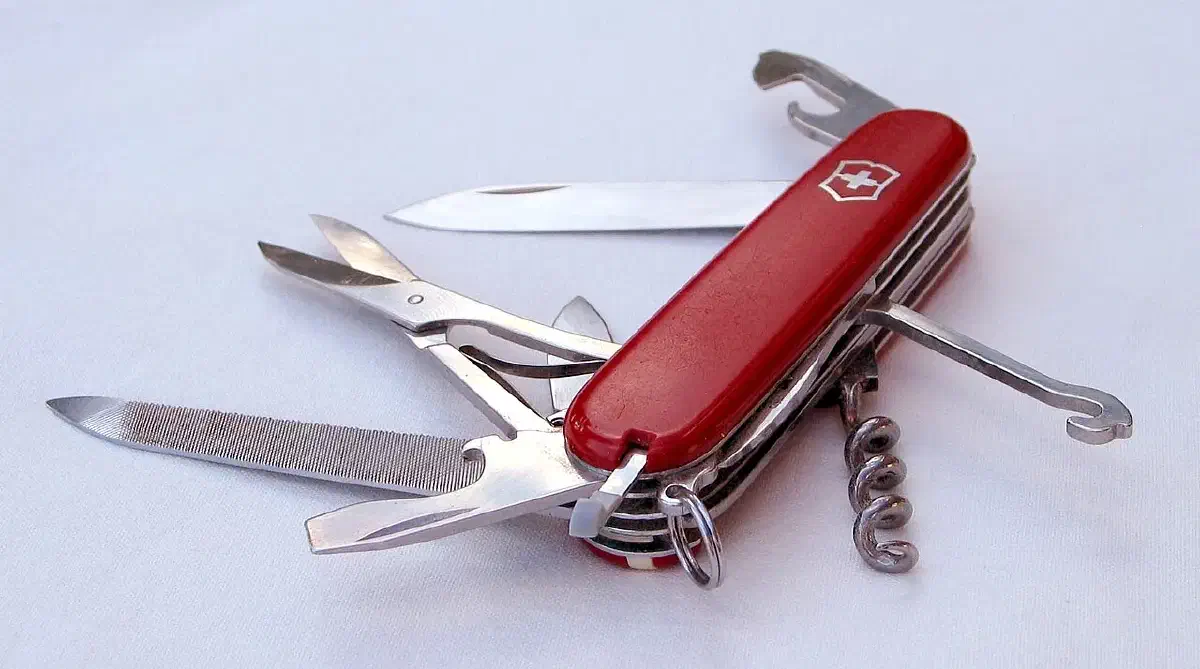
Every item in a pack costs weight, space and money. An item that does three jobs costs a third as much per job, and it gives you something else too: when a plan falls apart, a versatile item keeps helping. That is why experienced preppers talk about multi-use gear as a habit of thinking more than a shopping list. This guide covers how to recognize a good multi-use item, the specific things worth carrying and what each one can do, and how to build and test a kit around them.
Why multi-use items matter #
Carrying fewer, more capable items does three things for you. You pack lighter, which matters if you are walking long distances or trying to get by on limited resources. You save money, since one good item replaces several single-purpose ones. And you are covered for situations you did not predict, where you need a tool or a resource that was not on your list.
Multi-use does not mean the item should be mediocre at everything. The best candidates are things that are excellent at one main job and happen to be useful for several others. Duct tape and cordage are the classic examples.
How to spot a multi-use item #
Look for objects that can be used several ways, or whose features serve more than one purpose. A bandana is a good test. It can be a sun shield, a coarse pre-filter for water, a sling, a bandage or tinder for starting a fire. Once you start asking what else a thing could do, you find the potential in items you already own.
A reasonable test: before you add something to a kit, name three jobs it can do. If you can’t, it needs to be exceptional at its single job to earn the space.
The core items #
Duct tape #
Duct tape repairs a leaking tent, secures broken gear, holds a splint, closes a wound dressing and makes a patch for a torn jacket. It is called the Swiss Army knife of prepping for good reason. A full roll is bulky, so wrap a few feet around a pencil or a water bottle. You carry the tape without giving up pack space.
Paracord #
Paracord builds shelters, hangs gear, strings a clothesline, makes traps and can serve as an emergency fishing line. A bracelet or belt woven from it keeps a supply on your body where you can reach it. You can rarely have too much cord, though a woven bracelet is a good start rather than an entire plan.
Multi-tool #
A multi-tool puts pliers, screwdrivers, a knife, scissors and often a saw into a single carry. It cuts, pries, tightens and repairs, and it covers a lot of food preparation as well. Buy a high-quality one that will survive hard use for years. A cheap multi-tool that bends in the pliers is worse than no tool at all.
Emergency and Mylar blankets #
A Mylar blanket reflects body heat, which is what you need for warmth. It is also highly visible, so it works as a signal for help. It becomes a ground cover, a rain poncho, a makeshift shelter and, in a pinch, a stretcher. Carry a few. They weigh almost nothing and fold small.
Trash bags #
Heavy-duty trash bags collect water, make a rough poncho, keep gear dry, line a hole to hold water and carry waste. They are cheap enough to carry several, and they are one of the best value items on this list.
Food and water items #
Portable water filter. It lets you drink from rivers, lakes and streams, and it can remove harmful contaminants if you buy a durable one. Check what the filter handles before you rely on it.
Zip-top bags. They keep food, water and gear dry and airtight. They also collect rainwater, serve as improvised gloves and sort loose items into organized groups. Carry a few sizes.
Energy bars. They are compact, nutrient-dense and easy to eat on the move, which makes them a quick fuel source when stress cuts your appetite.
Collapsible water container. It stores and carries water, and it folds up flat when empty to save space. A few of them let you move water to where you are camped.
Manual can opener. If you are keeping canned food, you need a reliable way to open it. A compact, durable can opener is light and easy to use quickly.
Shelter and safety items #
Emergency tent. It gives instant, lightweight shelter that sets up quickly and keeps you out of the weather.
Whistle. A loud, durable whistle carries farther than a shout and costs almost nothing. It is the simplest way to alert rescuers.
Multi-purpose survival tool. Some compact tools combine a whistle, compass, thermometer and other functions, which helps you navigate and stay aware of your surroundings.
First aid kit. A compact, lightweight kit with bandages, antiseptic wipes and pain relievers treats minor injuries before they become serious. Check it for expired items twice a year.
Multi-use gear in a real emergency #
Consider how these pieces combine. In a winter power outage, a Mylar blanket and trash bags can seal a window and trap heat in one room, while duct tape holds both in place. Cordage hangs a tarp over a broken window. A multi-tool tightens a loose hinge, opens a can and trims the tape. None of those jobs is exotic, but a single bag of cheap items does all of them.
Outdoors the same logic holds. If a storm collapses your shelter, a trash bag and cord can become a rain fly. If you cut your hand, tape and a clean bandana can hold a dressing in place until you reach the first aid kit. Filtering water through a bandana before it goes through the filter keeps the filter from clogging, which extends its life. Small combinations like these are what the habit pays off in.
Remember the limits too. A trash bag is not a sleeping bag, tape is not a proper splint, and a bandana does not purify anything. Use the substitute to get through the first hours, then replace it with the correct tool.
Putting it together in a kit #
Cover the basics first #
Start with items that handle shelter, water, food, fire and first aid, since those are the foundations of survival. Then choose multi-use versions of each. A Mylar blanket covers shelter and warmth. A filter covers water. A multi-tool and cordage help with almost everything else.
Customize for where you are #
Every situation is different. Adjust the contents for your location, climate and planned activities. If you hike in cold weather, add warmth and insulation, such as extra clothing or hand warmers. In a flood zone, waterproof storage matters more.
Practice the skills #
Gear is only half of preparation. Practice fire starting, shelter building, navigation and first aid, so you know how to use each item in more than one way. Skills make multi-use items work.
Check the gear regularly #
Before any trip, do a full gear check. Look for damage, missing items and expired supplies, and replace or repair what needs it. A kit you have not opened in two years is a kit with surprises in it.
Test the kit #
The most useful thing you can do is a mock scenario. Set up in your backyard or a local park and use only what is in the kit to meet basic needs. You will quickly find the gaps, such as the tape that dried out, the lighter that does not light or the water filter you never learned to clean. Fix them while the cost is a bad afternoon rather than a real emergency.
A final note #
Multi-use gear rewards imagination, but it does not replace solid basics. Treat versatility as a tiebreaker between two good items rather than the reason to buy a weak one. Pick a handful of tools you trust, learn the jobs each one can do, and keep the kit tested and current. Then when something unexpected happens, you will already know what else the gear in your hands is capable of.
For related reading, see everyday carry, ten essential tools, survival gear checklist, and the survival skills hub.