A fence, a camera on a post and a dog cover the ground you can see from the porch. They don’t cover the ridge behind the house, the dry creek bed that makes a good approach, or the road a mile out. A drone gives you a way to look at those places in minutes without leaving shelter or putting yourself in the open.
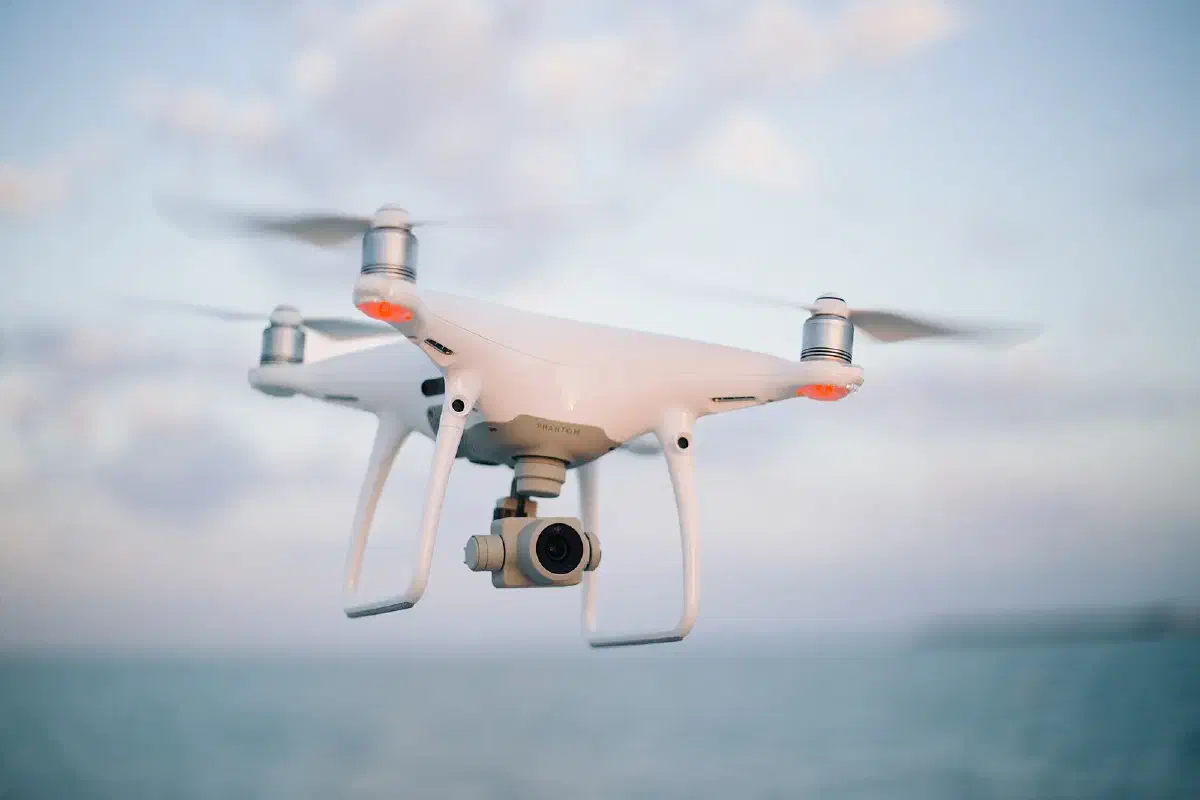
Drones, or unmanned aerial vehicles (UAVs), are aircraft flown by a remote operator or an onboard computer. They range from handheld models to large commercial aircraft, and carry cameras and sensors. They began as military tools for intelligence gathering and surveillance; falling prices have put capable ones within reach of ordinary households, and they’re now used in farming, filmmaking, construction, search and rescue and package delivery. For a prepper, the useful jobs fall into four groups: watching, securing, responding and delivering.
Why traditional security falls short #
Conventional systems rely on stationary cameras, alarms and human patrols, and each has limits. Fixed cameras cover one view and can’t follow a developing situation. Alarms can be disabled or avoided by someone who knows what they’re doing. Patrols are expensive in time and people, and a tired watchstander misses things. Terrain and structures create blind spots in all of them.
A drone doesn’t replace those layers. It fills gaps between them by flying over barriers, changing viewpoint on demand and covering a large area quickly.
Surveillance and situational awareness #
The first benefit is simply seeing more. Real-time aerial video lets you assess threats, spot resources, check a road and plan routes. Used regularly, it also tells you what normal looks like, so you notice the change: a new vehicle at the gate, a broken fence line, smoke on the horizon.
Remote monitoring. Drones can check on a bug-out location or the far boundary of a large property without a long walk or drive. They can also reach places that would be risky on foot.
Mapping and reconnaissance. Before bugging out to a remote location, or just exploring new ground, a drone can scout the terrain, identify obstacles, locate water, and establish rally points. Aerial surveys produce maps and 3D models that help with route planning. We cover the mapping workflow in detail in our guide to drone mapping and land management.
Patrols. Many drones can fly a preset route or circle an area on autopilot. Regular patrols reduce the load on human operators and give consistent coverage.
deterrence, detection and response #
The simple presence of a drone can deter intruders, because it raises the perceived chance of being seen. Some models can carry a loudspeaker or spotlight to challenge a trespasser from a safe distance.
For detection, thermal imaging shows heat signatures and picks out people and animals at night or in cover. Night vision gives a usable picture in low light. Drones that follow a target automatically, or fly to investigate a motion alarm, let one person monitor a lot of ground. More advanced systems can use facial recognition or license plate readers; they raise serious legal and privacy questions, so check the law before using them.
In an emergency, a drone can relay the location and nature of an incident to responders in real time. Some can carry a small payload, such as a first aid kit, a radio or a battery, to someone who can’t be reached quickly. After a storm or fire, they can assess damage, look for survivors and support search and rescue.
Delivery #
Delivery is a niche use, but a real one. Within the limits of the drone’s lift capacity, you can move small essentials, such as medication, a radio, batteries, water purification tablets or a message, across a flooded road or to a neighbor who can’t travel. Plan it like a mission:
- Decide what you’d carry and check that the weight sits within the drone’s rated payload.
- Set up secure drop-off points and clear landing zones.
- Test the process in different conditions and practice dropping payloads accurately.
- Track battery life and range, since a payload shortens flight time.
- Where several drones are available, consider simultaneous deliveries.
Realistically, payloads are small and distances short, so this complements ground transport rather than replacing it.
Choosing a drone #
Look at flight time, range, payload capacity, camera quality, durability and portability. A few types suit different needs.
- Multi-rotor drones (quadcopters) hover, maneuver well and handle detailed surveillance. They’re the best default.
- Fixed-wing drones stay up longer and cover large areas, suited to wide-area surveillance on big acreage.
- Miniature drones are small and light, good for close range and even indoor environments.
For surveillance, prioritize a high-resolution camera with zoom and a gimbal stabilizer, which keeps footage steady in wind. Thermal capability is worth the extra money if night security is your concern. For delivery, payload capacity comes first. Longer flight time and range help with both.
Accessories matter nearly as much as the aircraft:
- Extra batteries, to extend your flight time.
- A charger you can run off-grid, ideally solar, for use in a power outage.
- A carrying case, to protect and organize the kit.
- Propeller guards, to prevent damage in tight spaces.
- A sunshade, to cut glare on the controller screen.
- A reliable controller and spare propellers.
Useful advanced features include autonomous flight modes, intelligent tracking, live streaming to a phone or tablet, and obstacle avoidance.
Flying and mission planning #
Learn to fly before you rely on one. Practice in open space away from people and buildings, and get comfortable with manual, altitude-hold and GPS modes. Practice flying at different altitudes and distances, adjusting camera settings for clear images, and dropping payloads accurately. Formal flight training courses cover maneuvering, obstacle avoidance and emergency procedures.
For a surveillance mission, identify the points of interest and high-risk areas, choose a route and altitude that gives clear coverage, and set waypoints. Fly in daylight when you can for better visibility, unless you’re using thermal or night capability for a specific reason. Check the weather and wind speed before you launch. Run through a pre-flight check: batteries charged, GPS lock, propellers undamaged, storage card in.
Rules, privacy and ethics #
Drone regulation is real and enforcement is real. In many jurisdictions you must register the drone, mark it with the registration number, stay within visual line of sight, and respect altitude limits and no-fly zones near airports. Some commercial or specific operations require licenses or permits. Fines and penalties for violations can be significant, so learn the rules in your area before the first flight.
Privacy is a separate issue. Don’t use a drone to look into other people’s homes or yards or to record individuals without their consent, and be careful about flying over private property without permission. Many places restrict drones over residential areas or public spaces. Apart from the legal risk, a neighbor who sees a drone hovering over his yard is a neighbor who stops being friendly, and goodwill is a security asset too.
Costs #
Count the full cost, not just the sticker price. Consumer-grade drones are affordable; professional models with thermal cameras and advanced features cost much more. Add batteries, spares, software updates, training, insurance if you want it, and accessories. Replace batteries on schedule, because they degrade.
Limits and threats #
Be realistic about what a drone can’t do.
- Battery life limits missions to a short window, often well under an hour. Carry spares and plan around them.
- Weather such as rain, wind or snow can prevent safe flight.
- Signal interference or GPS loss can disrupt control and navigation. Signal boosters or better antennas can help.
- Payload capacity restricts what you can carry.
- Regulations and airspace may block flights in some places.
- Power and electronics. In a grid-down situation you need a way to recharge, and a drone isn’t an EMP-resistant device.
Maintenance matters too: clean the airframe, inspect for damage, calibrate sensors, update firmware and replace worn parts on a schedule, so the drone works when you need it.
There’s also a flip side. As drones become cheaper, others can use them against you, to look over your property or worse. Be aware of unauthorized drones overhead, keep sensitive items out of sight from above, and look into countermeasures that are legal where you live.
Looking ahead, improved image processing, artificial intelligence and integration with home automation and networked sensors will extend what drones can detect and how autonomously they respond. A larger solar-powered fleet is a project in its own right.
Putting it together #
Start modestly: a reliable multi-rotor with a good camera, two spare batteries and a way to charge them. Learn to fly it, register it if required, and run a weekly patrol of your boundary so you know your normal. Add thermal imaging if night security is a concern, and practice a delivery drill with a small payload. Treat the drone as one layer in a security plan that also includes good fencing, lighting, communications and sensible habits.
This piece is part of our wider coverage of security and communications. Related reading: Drone mapping and land management for off-grid properties and The Prepper’s Guide To Building A Solar-Powered Drone Fleet.