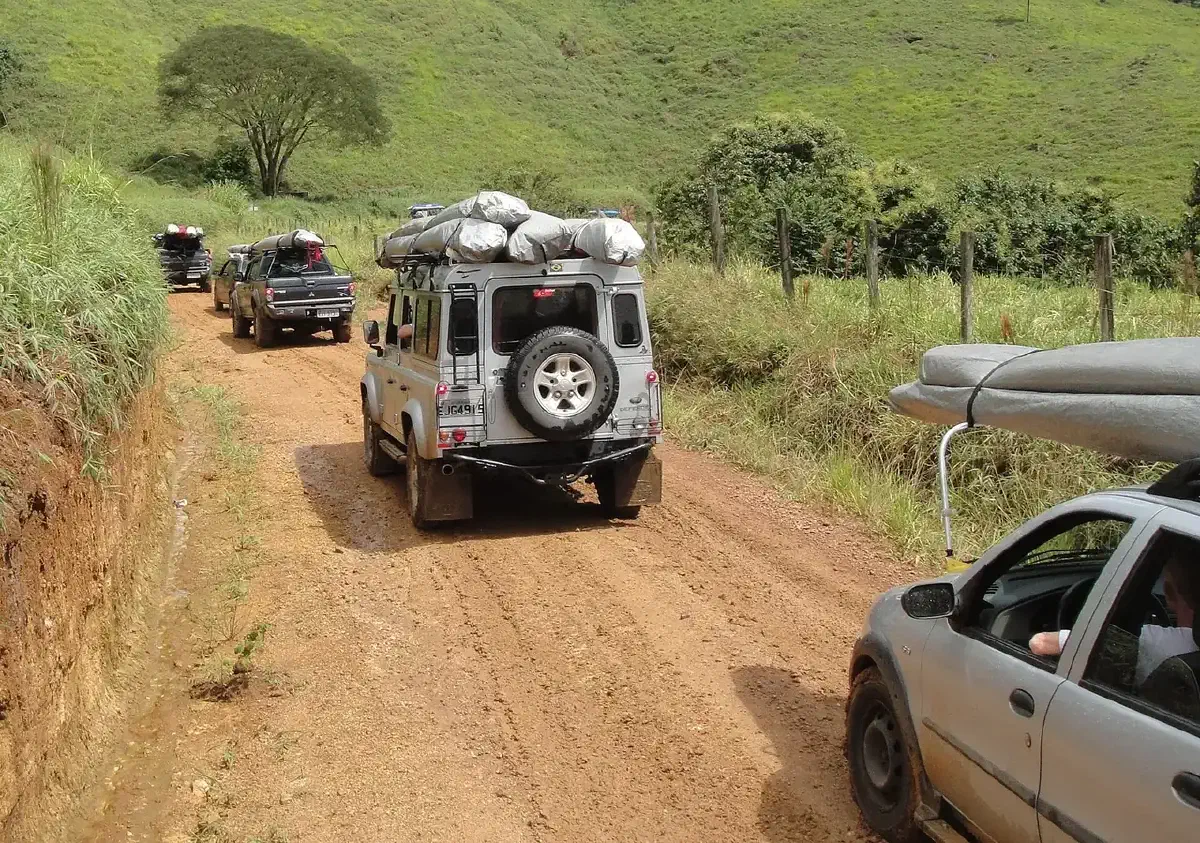
A terror attack, civil unrest or a natural disaster can force you out of your home, and a bug-out bag alone will only get you so far. On foot you cover a few miles a day. A vehicle gets you out of the danger zone in hours, lets you bring your family, and carries far more than any pack. That is the case for a bug-out vehicle, or BOV: a vehicle you’ve chosen and equipped ahead of time for one purpose, getting your people somewhere safer.
This guide covers what to look for, the pros and cons of the six most common choices, how to outfit the vehicle you pick, and how to keep it ready.
What a good BOV needs #
Almost every vehicle can serve in a pinch, but the good ones share a handful of traits.
- Room for your whole household plus a 72-hour supply of food and water. If you may need to sleep in it, the space has to be big enough for that too.
- Four-wheel drive and good ground clearance. Roads may be blocked, flooded or jammed, and the way out may be a dirt track.
- Enough power to handle difficult terrain and to tow another vehicle or a trailer.
- Decent gas mileage. Fuel may be impossible to find, so range matters more than horsepower.
- Easy to repair. Choose something with common parts that a mechanic, or you, can fix. A rare import with a proprietary part is a poor choice when you’re stranded.
No vehicle meets all of these. You are choosing which compromises you can live with.
Six bug-out vehicles compared #
Boat #
If you live near water, or your destination does, a boat is a real option. Water has no traffic jams, so travel can be quick, and the boat doubles as recreation until you need it. The downsides are cost and upkeep, especially for larger boats. Small boats can’t carry much gear, and open water exposes you to weather and heat.
RV #
A recreational vehicle meets most of the requirements on paper. It holds a family and comes with electricity and a toilet, because it is a mobile home. In practice it is large and conspicuous, which makes it a target for desperate people, so plan on camouflage. It is hard to turn around at a roadblock, expensive, and thirsty.
Pickup truck #
This is the popular choice among preppers, partly because it’s your normal transportation too. A pickup is roomy enough for a family, has a bed for supplies, is powerful enough to tow a trailer for shelter, and most can handle rough terrain. Its main weakness is that you can’t sleep comfortably in it, so you’ll want a trailer or a camper shell.
Motorcycle #
A motorcycle can’t carry a family or a lot of gear, but it is fast, mobile and fairly quiet, and some models handle rough ground well. Add pannier cases for supplies. The limits are real, though: one or two people at most, and a light bike is easy to steal.
Van #
A van is roomy, you can pull or fold the seats to make it a shelter, and it has space for supplies. Four-wheel-drive vans are hard to find, and converting a two-wheel-drive van is expensive. Buying one already 4WD is usually cheaper. Check carefully for rust, which shortens a vehicle’s life, and have the underside rust-proofed if it is in good shape.
Bus #
A bus can carry two families and be converted to include beds, a toilet and a kitchen. It’s big enough that few things will block it. But it needs a lot of conversion work before it’s useful for survival, conversions are expensive, and they must be planned carefully. It will also be very visible.
Which one is best? #
For most people, the pickup truck. It needs very little modification, it’s cost-effective because you can use it every day, and it has room for a family and supplies. Most pickups are strong enough for rough terrain, and their parts are easy to find. The honest answer, though, is that there is no perfect option. Fit the vehicle to your family size, your terrain and your budget.
Choosing the base vehicle #
If you’re building rather than buying ready-made, look at these factors in order.
Vehicle type. SUVs balance space, off-road ability and fuel economy. Trucks have the cargo and towing capacity but burn more fuel. Vans give a lot of interior room for large families or groups. Jeeps are known for rough-terrain capability.
Fuel efficiency. You may not find fuel on the way, so range matters. Look for good mileage both on pavement and off it.
Cargo space. List everything you’d bring and make sure it fits with the passengers.
Off-road ability. Where you live and the disasters you face decide how important this is. Four-wheel drive and ground clearance are the baseline for anywhere with floods, snow or unpaved roads.
Prioritize reliability and durability above all. A newer, plain, well-maintained vehicle beats a modified one with a questionable engine.
Outfitting the vehicle #
Storage #
Your gear needs to be organized, secured and reachable. Roof racks add space for bulky items like tents and coolers. Cargo nets keep loose items from shifting. A drawer system in the back keeps everything accessible and organized. Secure heavy gear, because anything unrestrained becomes a projectile in a sudden stop or crash.
Recovery and mobility #
Vehicles get stuck. Carry tow straps, shackles, a snatch block and traction aids. If you drive off-road regularly, a winch with a high pulling capacity and synthetic rope can recover your own vehicle or someone else’s. Off-road tires with reinforced sidewalls and a heavy-duty suspension improve traction and ground clearance and protect the chassis.
Spares and basics #
Keep these in the vehicle at all times:
- A bug-out bag for each person
- Extra fuel and empty containers
- Spare tire and tire chains
- A basic tool kit and jump starter
- Spare keys
- A car charger
- A CB radio
For repair skills to go with the tools, see our guide to roadside vehicle repair and maintenance.
Communication #
Communications can fail along with everything else. Two-way radios let you talk to your group and, on some bands, to emergency services. A CB radio is useful for hearing about road conditions from other travelers. Carry a charged phone with a portable or solar charger. If you work with a response team or travel through remote areas, a satellite phone and a mobile hotspot add reach.
Navigation #
Don’t count on GPS or cell service. Keep a paper road atlas or topographic maps in the vehicle, a compass, and a GPS unit as backup rather than as your only method. Plan several routes out of your area before you need them.
Emergency supplies #
Stock a fully equipped first aid kit, non-perishable food and water for at least three days for everyone, and emergency blankets for cold or for shade in hot weather. If you want more medical capability than a standard kit, add trauma supplies. Carry a water filter and spare cartridges, plus purification tablets as backup, and rotate emergency rations so they don’t spoil.
Power #
If you’re running radios, lights or medical gear, you need reliable power. A secondary battery or a small generator gives backup. Roof-mounted solar panels charge batteries in remote areas, and a portable solar generator adds flexibility. Fit a power inverter to convert 12-volt DC from the battery to AC for tools and appliances, and add USB, AC and DC outlets so you can charge multiple devices. LED lighting uses less power than older bulbs.
Lighting #
Strobes and bright LED lighting matter for people who work in disaster response, and for them a siren helps to move through traffic. For a family BOV, quiet and unobtrusive is usually better. A spotlight and a headlamp for each person are enough.
Building a response vehicle #
A few of these steps reflect a more demanding use: if you’re part of a volunteer or professional response team, you’ll need a heavier build than a family evacuation. Look at a four-wheel-drive SUV or sturdy truck as the platform, add shelving and cabinets for equipment, a stocked trauma kit and defibrillator if you’re trained to use them, and a power system sized to run it all. The principle stays the same: choose reliable, maintainable hardware and add what your mission needs, nothing more.
Keeping it ready #
A BOV that won’t start is worthless. Build a maintenance routine.
Regular inspections.
- Check tire pressure and look for wear or damage.
- Check oil, coolant and other fluids, and top them off.
- Test the battery and replace it before it fails.
Routine upkeep. Change the oil on schedule, rotate the tires for even wear, and have the brakes inspected regularly.
Supplies. Check expiration dates on food, water and medications, and replace the batteries in radios, lights and other electronics. Do this at the same time every season, such as when the clocks change.
Keep the fuel tank at least half full. Run the vehicle regularly, and take it on a practice trip loaded with your gear so you find problems at home rather than on the road. More on getting out and staying safe on the way is collected under survival skills.